Understanding the Montessori Journey
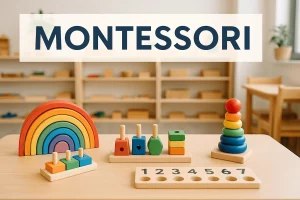
Many families embarking on an educational journey for their children often find themselves searching for terms like “Montessori near me” or “Montessori school near me.” These phrases indicate a growing interest in the Montessori pedagogy, a method that encourages holistic development and nurtures a child’s natural curiosity. If you’re looking for a Montessori school, you can explore our global Montessori locator at Montessori near me, which helps families connect with local Montessori schools, including specific examples such as Montessori in Oberursel, Germany.
Core Principles of Montessori Pedagogy
At the heart of Montessori education lie several core pedagogical principles, including the prepared environment, autonomy, observation, and sensory learning. Understanding and applying these principles can greatly enhance educational practices for parents, educators, and future teachers.
The Prepared Environment
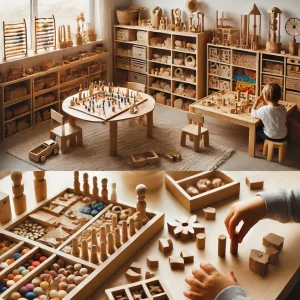
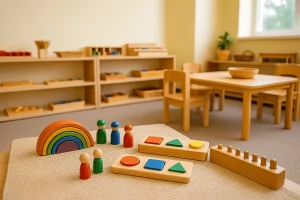
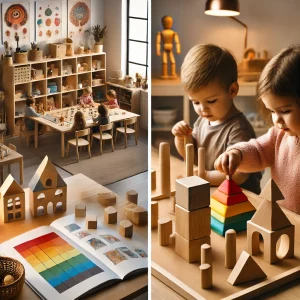
In Montessori classrooms, the prepared environment is meticulously organized to support child-led learning. For example, consider a traditional classroom being adapted to a Montessori approach. Desks might be replaced with low tables, and materials would be arranged on accessible shelves. Children can choose their activities, fostering a sense of independence.
Fostering Autonomy
Autonomy is a critical outcome of Montessori education. Imagine a student teacher planning their first classroom. They might implement activities that allow children to make choices—like deciding which subjects to focus on each day or which materials to use for projects. Such freedom encourages children to take ownership of their learning.
Observation
Observation is another essential principle, as it informs the educator about each child’s interests and developmental progress. By carefully observing students’ interactions in the classroom, a teacher can tailor lessons to meet individual needs. For instance, if a child shows a keen interest in animals, the teacher might introduce animal-themed activities that will captivate that interest while creating a relevant learning experience.
Sensory Learning
Montessori education emphasizes sensory learning, where children explore concepts through their senses. An example of this could be setting up a science experiment where students can touch different materials—like sand, water, and rocks—to learn about texture or weight. These hands-on experiences deepen understanding and retention.
Transitioning to Montessori: Practical Applications
Transitioning from a traditional classroom to a Montessori environment takes careful thought and planning. If a teacher training student is adapting their lesson plans, they might begin by integrating the concept of freedom within limits. They can encourage students to choose tasks but within a structured framework that ensures they learn essential concepts.
Building a Community of Respect
In a Montessori setting, building a community based on respect is vital. For instance, a teacher can implement a system where students are encouraged to work collaboratively, helping each other with tasks. This fosters not just social skills but also independent problem-solving, which is an essential part of the Montessori method.
Resources and Further Learning
For those interested in diving deeper into the world of Montessori, various resources are available. Check out our guía completa sobre la pedagogía Montessori for an extensive overview of the methodology.
Getting Acquainted with María Montessori
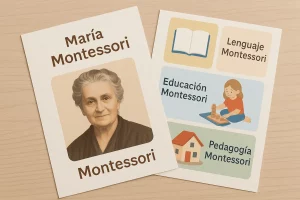
To appreciate the roots of Montessori pedagogy, understanding the life and work of María Montessori is essential. Her insights into child development continue to influence educational practices globally.
Additional Articles and Resources
To enrich your learning experience, consider exploring more articles on Montessori education available at this link. Gaining insights from various perspectives can provide comprehensive knowledge on the Montessori approach.
Understanding Montessori Educators
If you are on this journey for the long haul, reading about various Montessori methods can be beneficial. You might find useful information in articles that address practical needs, like Understanding the Montessori Method and others available on our website.
Conclusion
In conclusion, Montessori pedagogy offers a transformative approach to learning that emphasizes respect, independence, and sensory exploration. Whether you are a parent seeking a suitable educational environment or a teacher-in-training looking to implement these principles, the Montessori method can guide you in creating enriching learning experiences. Remember to refer back to the Montessori Maria website for further resources and support on your educational journey.