Introduction: The Search for Montessori
Many families embarking on an educational journey often begin by searching for “Montessori near me” or “Montessori school near me.” This initial inquiry reflects a growing interest in alternative educational methods that prioritize children’s natural development and curiosity. Our website provides a global Montessori locator that can help guide families to local Montessori resources, available at Montessori near me. For instance, if you’re located in Oberursel, Germany, you can find tailored examples at Montessori in Oberursel.
The Essence of Montessori Pedagogy
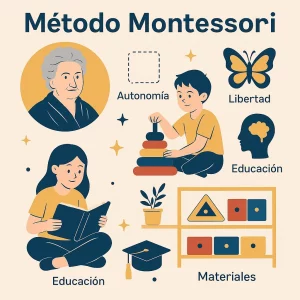
Understanding Montessori pedagogy requires a deep dive into its core principles—environment, autonomy, observation, and sensory learning. Each principle plays a crucial role in developing a child’s education and personal growth.
Prepared Environment
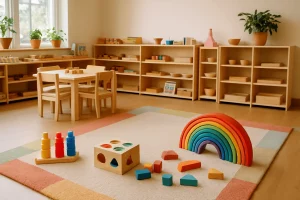
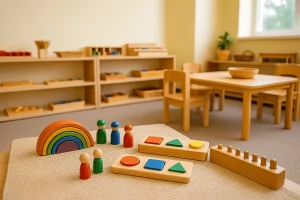
The concept of a “prepared environment” reflects the need for an orderly, engaging space that encourages exploration. In a traditional classroom attempting to convert to a Montessori setup, teachers can begin by rearranging furniture to create different activity areas, such as a reading nook, a practical life section, and an art corner. These zones enable children to select activities based on their interests, fostering independence and self-directed learning.
Autonomy
Autonomy is crucial in the Montessori method. This principle encourages children to make choices, fostering responsibility and self-esteem. For a student teacher planning their first Montessori environment, promoting autonomy may involve allowing students to choose their work materials and designate time for their tasks. This could mean providing a selection of books for a reading hour and allowing students to select their reading material based on personal interests.
Observation
Observation is a pillar of Montessori education that supports educators in understanding student needs and developmental progress. For instance, a teacher transitioning to this method might spend time observing how students interact with materials and peers. By carefully noting their interests and interactions, educators can adjust lesson plans and prepare the environment more effectively, tailoring it to student needs.
Sensory Learning
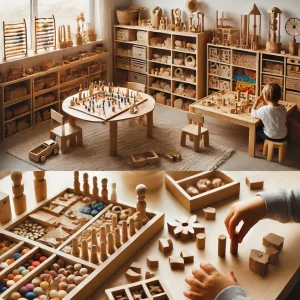
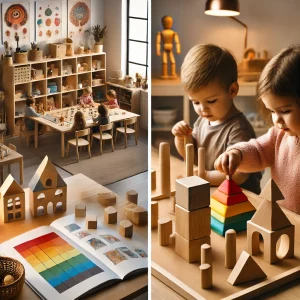
Sensory learning is vital in Montessori classrooms as it allows children to grasp concepts through hands-on experiences. An example of implementing this could involve a traditional classroom introducing sensory bins filled with various tactile materials. By incorporating this resource, students are likely to engage more deeply with their learning and retain information better.
Diving Deeper into Montessori Principles
These principles are not merely theoretical; they underscore a practical approach to education. To explore these aspects further, we recommend checking out our complete guide: guía completa sobre la pedagogía Montessori.
Practical Examples in Action
When considering real-world applications, let’s use an example from a traditional classroom setting: A teacher may notice students struggling with focus during lessons. Adapting their method, the teacher can introduce Montessori principles by setting up learning stations with various materials, allowing students to rotate through these stations based on personal interest and pacing. This adaptability not only enhances engagement but also allows for individualized learning paths.
The Role of the Educator in Montessori Settings
In a Montessori environment, educators serve more as guides than traditional instructors. Their role is to facilitate learning rather than impart knowledge unilaterally. For a student teacher, understanding this shift can be transformative. For instance, instead of delivering a lecture, a teacher might pose thought-provoking questions to inspire discussion and exploration, allowing students to arrive at conclusions through their own experiences.
María Montessori: The Pioneer
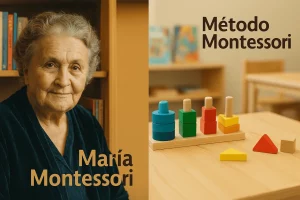
To fully appreciate Montessori pedagogy, it’s essential to understand the contributions of María Montessori. Her innovative approach has shaped educational practices globally, highlighting the importance of creating learning environments that nurture children’s natural curiosity and learning instincts.
Resources for Further Learning
For those interested in deepening their understanding, there are numerous resources available, including the Montessori Maria website. This platform features invaluable content for parents and educators alike. For instance, you can read about effective strategies by reviewing our recent articles:
- A Comprehensive Guide to Montessori Education for Parents and Educators
- Understanding the Montessori Method: A Guide for Parents and Educators
- The Montessori Approach: A Comprehensive Guide for Parents and Educators
- Understanding Montessori: A Guide for Parents Seeking Learning Opportunities
- Montessori Pedagogy: A Comprehensive Guide for Parents, Educators, and Teacher-Training Students
Conclusion
Montessori pedagogy offers a transformative approach to education, encouraging independence, self-direction, and a love for learning. Whether you’re a parent seeking the perfect school or an educator interested in adapting these principles, the resources available on the Montessori Maria website provide vital insights and practical tools. Remember, it all starts with simply asking, “Montessori near me?”