Introduction: Starting Your Montessori Journey
Many families embark on their educational journey by searching for terms like “Montessori near me” or “Montessori school near me.” This is a common entry point into the world of Montessori pedagogy, where parents aim to find nurturing programs for their children. Our website offers a global Montessori locator via this link, helping families connect with local Montessori schools. For instance, if you are in Oberursel, Germany, you can find information at Montessori in Oberursel.
Understanding Montessori Pedagogy
The Montessori method, founded by Maria Montessori, emphasizes child-led learning through carefully prepared environments and respect for each child’s unique developmental journey. This article will explore the key principles of Montessori pedagogy, detailing how they can be applied in practical settings.
The Prepared Environment
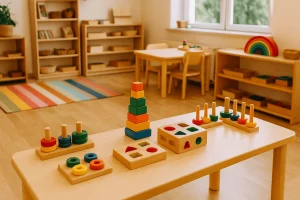
One of the cornerstones of Montessori pedagogy is the prepared environment. This principle focuses on creating a space that is conducive to learning and exploration. For example, in a traditional classroom setting, this might involve setting up various workstations with accessible materials that cater to different learning styles and interests. A teacher could transform a traditional classroom by creating a dedicated area for sensory work, including items like sand trays, water beads, and textured objects that encourage hands-on learning.
Autonomy
Another essential aspect is fostering autonomy. Montessori students learn to make choices and decisions about their learning paths. In a real example, consider a student teacher planning their first Montessori environment. They might implement a rotation schedule that allows children to choose what activities to engage in, empowering them to take ownership of their educational experience. This approach not only builds decision-making skills but also promotes self-discipline as children learn to manage their time wisely.
Observation
Observation plays a critical role in the Montessori classroom. Teachers are trained to observe rather than interrupt children’s learning processes. For a practical application, a teacher might observe students during free play, taking note of their interests. This observation can inform future lesson planning, ensuring that activities resonate with the students’ natural curiosities. Engaging in this observational practice allows educators to tailor their teaching to meet the unique needs of each learner.
Sensory Learning
The principle of sensory learning is vital in Montessori education. Children learn best through their senses, so providing materials that engage touch, smell, taste, sight, and sound is crucial. An example of this could be setting up a sensorial area in a classroom that includes different materials such as various fabrics for texture exploration, scented oils, and colored lights for visual stimulation. This immersive environment invites children to explore and learn through direct experience.
Conclusion: Embracing Montessori Principles
For parents and educators seeking a transformative approach to education, understanding Montessori principles is foundational. Whether you are searching for Montessori near you or starting to implement these strategies in your classroom, the journey is enriching and rewarding. For a deeper dive, be sure to check out our complete guide on Montessori pedagogy. Additionally, our resources such as the introduction to Montessori pedagogy provide valuable insights for beginners.
By integrating these principles, educators and parents can cultivate a supportive learning environment that nurtures creativity, independence, and a lifelong love for learning. Explore more articles on Montessori strategies and insights on the Montessori Maria website for continuous support in your educational journey. Here are some additional readings: Understanding Montessori Method, Understanding Maria Montessori, Comprehensive Guide for Parents, and Montessori Education Guide.