Starting Your Montessori Journey
Many families begin their journey into Montessori pedagogy by searching for “Montessori near me” or “Montessori school near me.” This search reflects a growing interest in educational approaches that prioritize child-centered learning. On our website, you can find a global Montessori locator, which can assist you in discovering Montessori resources within your vicinity. For instance, if you’re in Oberursel, Germany, you can directly access local Montessori options through this specific example.
Understanding Montessori Pedagogy
Montessori pedagogy, founded by the renowned educator María Montessori, centers around several key principles. These principles include the prepared environment, child autonomy, careful observation, and sensory learning. Each principle plays a significant role in fostering children’s natural curiosity and desire to learn.
The Prepared Environment
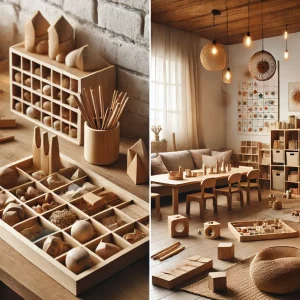
A prepared environment in a Montessori classroom is designed to facilitate independent learning. This can be practically applied when adapting a traditional classroom. For instance, if a teacher is transitioning from a conventional setting, they might rearrange the space to create distinct areas: a reading nook, a sensory table, and a space for creative expression. Each area should be accessible and equipped with materials that align with the children’s developmental needs. This type of arrangement promotes autonomy, allowing children to explore and learn at their own pace.
Child Autonomy
Child autonomy is a fundamental aspect of Montessori pedagogy. When student teachers plan their first Montessori environment, they must consider how to encourage children to make choices about their learning activities. For example, providing a variety of materials and tasks that children can choose from empowers them to take ownership of their learning process. By doing so, children not only learn to make decisions but also develop critical thinking skills.
Observation
Another critical principle is observation. Educators in Montessori settings often spend time observing students rather than directing their learning. This practice allows teachers to understand each child’s unique interests and developmental stages. For instance, a teacher might notice a child’s fascination with nature and then provide materials related to that interest, such as plant life cycles or ecosystem workshops, thus tailoring lessons to the child’s curiosity.
Sensory Learning
Sensory learning is integral to Montessori pedagogy. It involves engaging children through their senses—sight, sound, touch, taste, and smell—to deepen their understanding of concepts. For example, in a Montessori classroom, instead of merely learning about geometric shapes through textbooks, children might use tactile materials to build shapes and understand their properties. This hands-on approach ensures that concepts are not just learned but internalized.
Benefits of Montessori Pedagogy
The benefits of implementing Montessori pedagogy in educational settings are manifold. For parents and educators, it fosters a collaborative environment where children thrive. Research has shown that children educated in Montessori settings often develop critical thinking skills, social awareness, and a love for learning that lasts a lifetime. To delve deeper into these advantages, you may refer to our complete guide on Montessori pedagogy.
Educational Outcomes
Moreover, the Montessori approach cultivates a growth mindset. Rather than viewing challenges as obstacles, children learn to embrace them as opportunities for development. This mindset is fundamental in nurturing resilience and creativity, which are essential skills in today’s ever-evolving world.
Montessori and Technology
While Montessori emphasizes hands-on learning and physical interaction with materials, technology can also play a vital role in a modern Montessori setting. Tools like tablets or classroom computers can support research and project work, provided they are used as part of a balanced approach that includes ample time for tactile learning and interpersonal interaction.
Implementing Montessori Pedagogy in Diverse Settings
Montessori pedagogy is adaptable to various educational contexts, including public, private, and homeschool environments. Educators who are interested in bringing this method into their classrooms can begin small by incorporating Montessori principles within their existing curriculum. For example, they can create areas in the classroom dedicated to inquiry-based learning or allow children more freedom to choose their learning paths.
Supporting Student Teachers
For student teachers, acquiring practical experience in Montessori schools or training programs is invaluable. Being embedded in such environments allows them to observe and practice the principles of Montessori in action. The real-life application of these concepts will enhance their understanding and effectiveness as future educators. To find the nearest Montessori programs, consider visiting the Montessori locator on our website.
Parent Involvement
Parents play an essential role in Montessori education. Active participation in their child’s learning process can further enrich the experience. Families can create home environments that mirror Montessori principles by providing accessible learning materials and allowing children the freedom to explore their interests. Such involvement strengthens the bond between families and schools.
Conclusion
In conclusion, understanding and implementing Montessori pedagogy can transform educational experiences for children. Both parents and educators should encourage a sense of curiosity, autonomy, and confidence in children. For further reading and resources on Montessori methodologies, we recommend exploring our comprehensive guide available at Understanding Montessori Pedagogy and the many articles linked throughout this post.
As you embark on this educational journey, remember to leverage resources available through the Montessori Maria website, and feel free to reach out for assistance along the way. Together, we can collaborate to create learning environments that nurture the potential of every child.