Understanding the Montessori Journey
Many families embarking on their educational journey for their children often begin by searching for “Montessori near me” or “Montessori school near me.” This organic search is a great first step in discovering a transformative approach to education. At the Montessori Maria website, we provide a global Montessori locator that helps families find schools and resources in their local area, with examples such as Montessori near Oberursel, Germany. This online resource is valuable for parents and educators alike who seek to understand and implement Montessori principles in their teaching or parenting approach.
Core Principles of Montessori Pedagogy
The heart of Montessori education lies in several fundamental pedagogical principles. These include the prepared environment, student autonomy, careful observation, and sensory learning. Each principle can be transformational in a classroom setting and for students, teachers, and parents. For a deep dive into these principles and their implications, check out our guía completa sobre la pedagogía Montessori.
The Prepared Environment
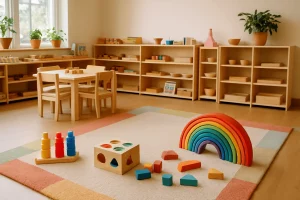
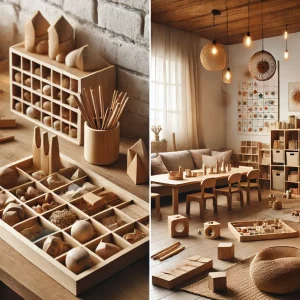
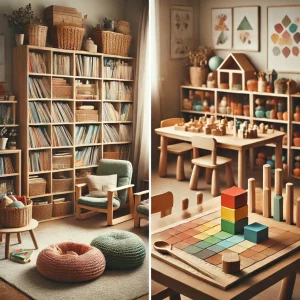
The prepared environment is a carefully designed space that promotes independence, freedom within limits, and a sense of order. In a traditional classroom being adapted to a Montessori setting, consider how the furniture arrangement can be modified. Instead of rows of desks, you might create workstations that allow for movement and collaboration. Materials should be accessible, inviting, and varied to cater to different learning styles.
Autonomy
Autonomy is central to Montessori pedagogy. Students should have the freedom to choose their activities, which enhances their intrinsic motivation. Imagine a student teacher planning their first Montessori classroom; they might select a series of activities that allow children to engage with their interests. For instance, if a child shows curiosity about insects, the student teacher could provide magnifying glasses and books about entomology to encourage individual exploration.
Observation
Observation is key in Montessori pedagogy. Educators need to observe students to understand their needs and interests better. In a classroom setting, this might involve taking notes on children’s interactions during group work or one-on-one activities. By understanding what captivates a student’s attention, teachers can tailor future lessons to engage each child’s learning further. All these aspects revolving around observation are elaborated in our understanding Montessori pedagogy guide.
Sensory Learning
Sensory learning emphasizes engaging the senses to absorb knowledge. In a Montessori classroom, this could involve a variety of hands-on activities. For example, using tactile materials allows students to learn about math through manipulation, enhancing their understanding of concepts like quantity and number relationships. Sensory experiences can also be cross-curricular; a child might explore textures while learning about nature during a science lesson.
Implementing Montessori in Traditional Settings
Many educators wonder how to blend Montessori principles into traditional educational paradigms. One of the best ways to start is by incorporating small elements of the Montessori method into lesson plans. For instance, a standard lesson plan might include options for individual or group work, enabling student choice. Teachers can provide materials but let students choose how to engage with them, fostering a sense of ownership over their learning journey.
Real-World Examples of Montessori in Action
A great practical application of Montessori principles can be seen in classroom activities. For example, a traditional classroom can be transformed by introducing a ‘work cycle.’ During this time, children are allowed to roam to different learning stations, whether it involves reading, art, or science experiments—promoting engagement and curiosity. A student teacher might feel empowered to create their own ‘work cycle’ where they introduce engaging materials and let children choose which activities to pursue.
Continuously Learning About Montessori
As you further explore Montessori education, consider studying the works of María Montessori. Understanding her philosophy can help parents, educators, and teacher-training students apply her methods effectively. Our website also features articles that can help deep dive into specific topics and provide exercises and scenarios that help illustrate the application of Montessori pedagogy in the real world.
Conclusion: The Journey Ahead
In summary, Montessori pedagogy is more than just an educational method; it is a philosophy rooted in respect, understanding, and empathy towards children. As families search for educational pathways, whether by looking for “Montessori near me” or seeking out resources globally, we hope that the Montessori Maria website serves as a useful guide in your exploration. For parents and educators eager to become influential in children’s educational journeys, diving into Montessori principles can lead to transformative experiences for both students and teachers alike.
If you’re interested in gaining more insights into Montessori education, be sure to explore our comprehensive resources available, including Montessori education guide and additional articles for fostering harmony in education such as understanding the Montessori method.
Ultimately, implementing Montessori pedagogy is about creating an inviting and enriching environment that respects each child’s individuality and fosters a lifelong love of learning.