Understanding Montessori Pedagogy
Many families embark on their educational journey by searching for “Montessori near me” or “Montessori school near me.” This growing interest in Montessori education highlights the increasing number of parents and educators seeking alternatives to traditional educational frameworks. To aid in your search for Montessori schools, our website provides a global Montessori locator, helping families find local options tailored to their needs. For instance, you can find specific examples like Montessori opportunities in Oberursel, Germany.
The Principles of Montessori Pedagogy
Montessori pedagogy is rooted in several pivotal principles: a prepared environment, autonomy, observation, sensory learning, and individualized instruction. Let’s explore these principles and how they can be practically applied in both traditional and Montessori settings.
Prepared Environment
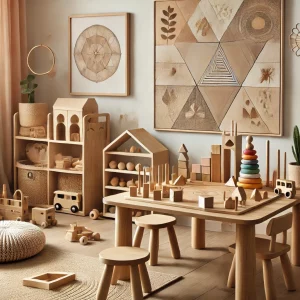
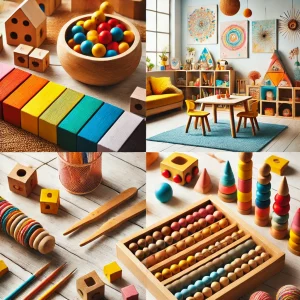
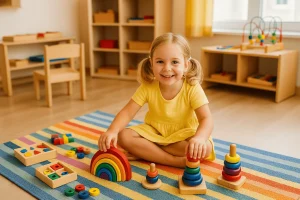
A prepared environment is essential in Montessori pedagogy. It is designed to meet the developmental needs of children, allowing them to explore at their own pace. In a traditional classroom, a teacher may have rows of desks facing the front, which can create barriers to interaction and exploration. By adapting this environment, teachers could introduce flexible seating arrangements, such as tables and floor cushions that allow movement and collaboration. For a more detailed exploration of this principle, check out our complete guide on Montessori pedagogy.
Autonomy
Encouraging autonomy is a hallmark of Montessori education. This principle allows children to make choices about their learning, fostering independence and critical thinking. For instance, a student teacher planning their first Montessori environment might create workstations with various activities that children can select based on their interests. This approach would eliminate the ‘one-size-fits-all’ mentality typical in traditional classrooms. As you delve deeper into the philosophy behind Montessori, consider exploring this introduction to Montessori pedagogy.
Observation
Observation is a critical tool in Montessori education. It enables educators to understand each child’s development, interests, and needs. In a traditional setting, teachers might rely solely on assessments and grades; however, in a Montessori environment, teachers frequently observe students during activities, allowing for tailored support. A teacher can note a child’s interactions with peers and materials, then offer guidance or resources aligned with their interests and developmental stage.
Sensory Learning
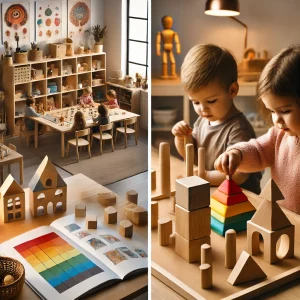
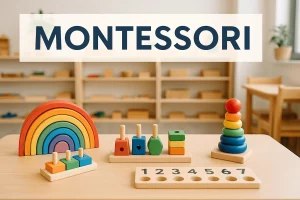
Montessori emphasizes sensory learning as a pathway to understanding abstract concepts. Traditional classrooms may focus heavily on auditory and visual learning, but Montessori encourages hands-on exploration. For instance, teaching math concepts through physical manipulatives (like beads or blocks) can provide tangible experiences. Children don’t just learn numbers; they learn the underlying concepts through exploration and manipulation, enhancing their understanding.
Individualized Instruction
Finally, individualized instruction is inherent in Montessori pedagogy. Each child works at their own pace, allowing them to fully grasp concepts before moving on. In traditional education, students often progress based on age or grade level. A Montessori approach allows for differentiation, meaning that if one child is excelling in reading but struggling with math, the educator can provide further resources and adjust learning pathways accordingly.
Implementing Montessori Principles in Various Settings
Understanding how to implement these principles is crucial for parents, educators, and teacher-training students. Adapting a traditional classroom into a Montessori environment requires reflection and adjustments but can be incredibly rewarding.
Adapting a Traditional Classroom
Transforming a traditional classroom involves rethinking the layout, materials, and teaching style. For example, consider a teacher who wants to create a more engaging math program. Instead of lectures followed by worksheets, the teacher could set up discovery stations filled with games, manipulatives, and real-life applications of math. This hands-on approach emphasizes the principles of sensory learning and autonomy while allowing for observation by the teacher, who can then tailor future lessons based on student engagement and understanding.
A Student Teacher’s First Montessori Environment
For student teachers, planning a Montessori environment can feel daunting yet exhilarating. Imagine a student teacher designing a classroom for young children. They might incorporate learning zones for reading, science, art, and practical life skills. Each area would be stocked with inviting materials that encourage exploration, such as puzzles, art supplies, and nature items for study. Creating such an environment takes creativity, understanding, and a deep commitment to the principles of Montessori pedagogy. For further insights, skim through our content on understanding Montessori methods via this in-depth guide for parents and educators.
The Impact of Montessori Pedagogy on Children
Montessori pedagogy has far-reaching and enduring effects on children. By encouraging active participation and self-directed learning, children gain confidence and resilience. These qualities help them navigate both academic settings and everyday challenges as they develop into adults.
Our goal at the Montessori Maria website is to provide resources and support for families and educators alike. The more informed you are about Montessori pedagogy, the better equipped you will be to make choices that positively impact your child’s education. We invite you to explore further content tailored to this philosophy: consider reading about exploring Montessori pedagogy.
Conclusion
In conclusion, embracing Montessori pedagogy is a transformative experience that benefits children, parents, and educators alike. By understanding the foundational principles such as prepared environments, autonomy, observation, sensory learning, and individualized instruction, you can make informed decisions about your child’s education. Whether you are seeking out a Montessori school or trying to implement these principles in your teaching practice, many resources are available to support you.
As you embark on this journey, don’t hesitate to utilize our global locator for Montessori options, or check out our latest articles to deepen your understanding of Montessori methods. Educating yourself about these practices opens a world of possibilities for fostering your child’s love of learning.
For more articles, make sure to explore recent publications such as a comprehensive guide to Montessori education or delve into understanding Maria Montessori for deeper insights. Together, let us champion a new generation of independent learners.