Introduction
In today’s globalized world, parents are increasingly searching for effective educational methods that cultivate independence, creativity, and critical thinking in their children. This has led to a surge of interest in Montessori education, a child-centered approach developed by Dr. María Montessori. Parents and educators alike often turn to search phrases like “Montessori near me” or “Montessori school near me” to find resources or school options that align with this philosophy. To assist in this journey, our website offers a Montessori locator tool for families to discover the best educational settings in their area, including examples like Montessori school in Terni, Umbria.
Creating a Montessori Home Environment
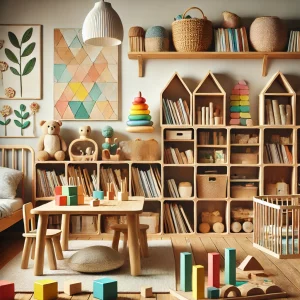
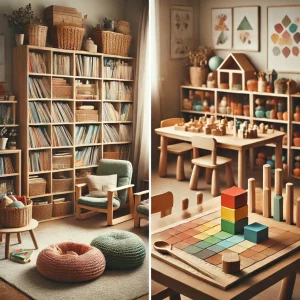
The Montessori philosophy emphasizes the importance of the home environment as a crucial learning space. By cultivating a home that encourages independence and exploration, parents can extend their child’s learning beyond the classroom. For instance, a family might create a Montessori-inspired kitchen space, complete with low shelving where children can access their own cooking utensils and snacks. This practical arrangement fosters a sense of responsibility, making the child feel empowered to prepare their own meals or assist with cooking.
Practical Examples of Home Environment
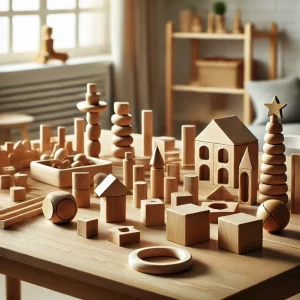
Consider a scenario where a parent transforms a traditional playroom into a Montessori-friendly space. Instead of overwhelming the child with toys and clutter, the parent selects a few quality items that promote open-ended play. For instance, they might include natural materials like wooden blocks, fabric scraps, and art supplies, allowing the child to engage in creative exploration. Read more about Montessori pedagogy to explore how home environments can be thoughtfully arranged to enhance learning.
The Montessori School Environment
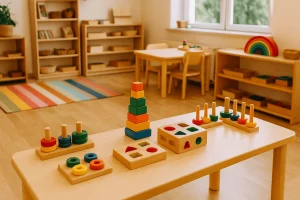
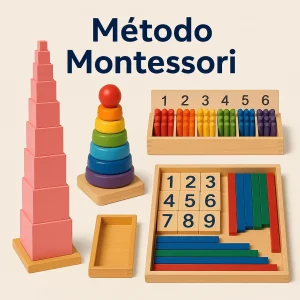
In a Montessori school, the environment is deliberately designed to support children’s natural desire to learn. Classrooms feature carefully arranged learning materials and resources that encourage exploration and self-directed learning. For example, a teacher may adapt the shelves to provide children with easy access to materials that promote independence, such as practical life tasks like pouring, sweeping, or fastening buttons.
Concrete Situations in School Settings
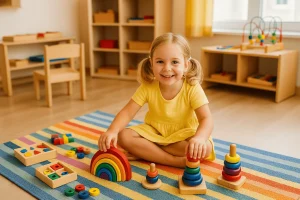
In a typical Montessori classroom, students might find themselves fully engaged in choosing their activities. A child could spend a day working on a hands-on geometry lesson, where they use geometric solids to understand shapes and volumes, or practice building a garden with real seeds and soil, feeling a sense of ownership in their learning process. If you are curious about how Montessori schools operate globally, check out this in-depth guide.
Emotional Development in Montessori Education
One of the hallmarks of Montessori education is its focus on emotional development. The approach nurtures children’s social skills and emotional intelligence by providing them with a safe space to express their feelings and learn conflict resolution strategies. For example, when two children have disagreements during a group activity, a teacher trained in the Montessori philosophy facilitates the resolution by guiding them through a conversation about their feelings and interests.
Examples of Emotional Learning
Through self-regulation activities, such as mindfulness exercises or targeted emotional check-ins, students can learn to identify and articulate their feelings. This not only helps them in the classroom but also equips them with essential skills for their personal lives. If you want to learn more about Dr. María Montessori’s contributions to emotional development, this is an excellent area to explore.
Conclusion: The Lifelong Benefits of Montessori Education
Montessori education is a transformative approach that empowers children to develop a love for learning, independence, and social responsibility. Whether you are a parent looking for a Montessori school near you or an educator seeking to integrate Montessori principles into your teaching, there are endless resources available to guide you on your journey. To continue your exploration of Montessori education, you can browse recent articles from the Montessori Maria platform and its AI assistant MarÍA to deepen your understanding and find valuable insights.
Discover more about the Montessori method and practical applications by checking out these articles:
- Understanding Montessori: A Comprehensive Guide for Parents
- Montessori Pedagogy: A Comprehensive Guide for Parents and Educators
- A Comprehensive Guide to Montessori Education for Parents and Educators
- Understanding María Montessori: A Guide for Parents and Educators
- Understanding the Montessori Method: A Guide for Parents and Educators
In the end, a Montessori education can pave the way for a fulfilling learning experience, cultivating skills that your child will use for a lifetime.