Introduction to Montessori Education
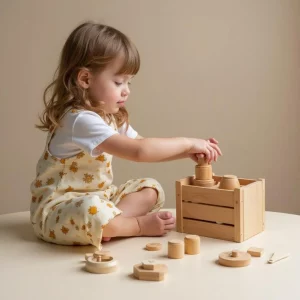
In today’s fast-paced world, many parents and educators are turning their attention to alternative educational philosophies for their children. Montessori education, designed by Dr. María Montessori, emphasizes independence, hands-on learning, and respect for a child’s natural psychological, physical, and social development. As parents search for the best educational fit, phrases like “Montessori near me” and “Montessori school near me” have become common queries. For those looking for guidance, the Montessori Maria platform and its AI assistant MarÍA can provide valuable resources and support.
Home Environment
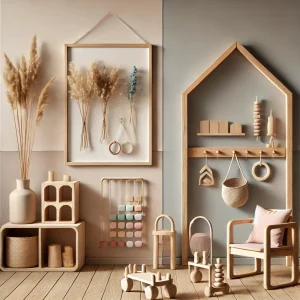
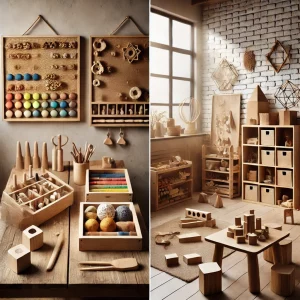
Creating a Montessori-inspired home environment can significantly impact a child’s learning experience. The core principles of the Montessori method advocate for structured freedom, allowing children to explore and learn at their own pace. This starts at home.
Designing Montessori Spaces
One effective way to establish a Montessori environment at home is through intentional design. For example, a family can create a Montessori-inspired kitchen space where children can safely work at a low table to prepare snacks or even cook simple meals. This not only nurtures their independence but also instills practical life skills.
Independence through Accessibility
In the bedroom, parents can adapt the space by using child-sized furniture and accessible storage. For instance, having low shelves filled with books and toys allows children to choose their activities freely, fostering a sense of ownership and initiative. This principle of accessibility is part of the comprehensive approach outlined in our guía completa sobre la pedagogía Montessori.
School Environment
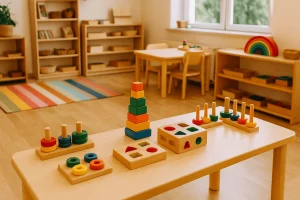
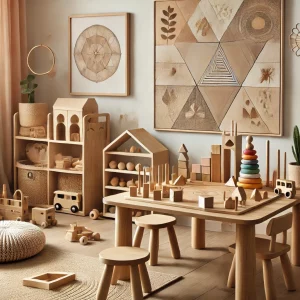
The classroom environment is equally important in Montessori education. It serves as a second home where children engage with their peers, educators, and learning materials in a prepared setting designed to foster exploration and collaboration.
Adapting the Learning Space
In a Montessori classroom, teachers play a crucial role by adapting the learning environment to suit the developmental stages of their students. For example, a teacher might reorganize the shelves to expose children to various subjects or themes that pique their interest, encouraging self-directed learning and exploration.
Encouraging Self-Regulation
An essential aspect of Montessori education is the development of self-regulation skills. Students learn to manage their emotions and behavior in structured, yet flexible, environments. For instance, during a busy work cycle, a teacher might provide a quiet corner equipped with calming resources like stress balls or soft materials. This allows children to take a moment to regroup when feeling overwhelmed—a vital skill that supports their emotional growth.
Emotional Development
Emotional development is intricately tied to both the home and school environments within Montessori education. Understanding children’s emotional needs is essential for fostering resilience, empathy, and social skills.
Building Strong Relationships
In a Montessori classroom, the mixed-age setting promotes strong relationships among peers. Older students often mentor younger ones, fostering compassion and a sense of community. Similarly, at home, parents can encourage siblings to help each other with chores, reinforcing teamwork and empathy.
Understanding Emotions
Educators can incorporate lessons on emotional intelligence by guiding students to identify and express their feelings. Activities such as “feelings charades” or using visual emotion cards can help children articulate their emotions while understanding those of their peers. This foundational skill aligns seamlessly with the principles laid out in our introducción a la pedagogía Montessori.
Conclusion
As parents and educators embark on the journey of Montessori education, it’s essential to recognize that both home and school environments play a pivotal role in a child’s holistic development. Adapting spaces for independence, fostering emotional skills, and cultivating meaningful relationships are all integral components of the Montessori method. By utilizing resources such as the Montessori locator tool on the Montessori Maria platform, families and educators can find the support they need to implement these transformative practices in their lives. If you’re eager to dive deeper into Montessori education, explore our latest articles such as Understanding the Montessori Method and The Transformative Power of Montessori Education. Each of these resources can provide additional insights on how to navigate the principles and practices effectively.
Additionally, interested readers can learn more about María Montessori and her contributions to education through our dedicated section. With the right tools, parents and educators can create a nurturing, developmentally appropriate environment that empowers children to thrive.