Understanding Montessori Education
As parents and educators, many of us find ourselves exploring the educational landscape, searching for methodologies that inspire and nurture children’s natural curiosity and love for learning. Phrases like “Montessori near me” or “Montessori school near me” become common searches as families embark on this journey. To aid you in your quest for Montessori education, our website features a Montessori locator tool to help you discover nearby schools and resources, examples of which include options in Terni, Umbria, found at this link. In this article, we will explore Montessori education across three critical areas: the home environment, the school environment, and emotional development.
The Home Environment
Creating a Montessori-inspired home requires thoughtful integration of the pedagogy into daily life. The objective is to cultivate an environment that fosters independence and learning. Parents can establish a space that encourages children to engage with their surroundings and take charge of their learning process.
Designing a Montessori Kitchen Space
Consider the kitchen, a central hub for family interaction. By creating a Montessori-inspired kitchen, parents enable children to engage in food preparation and meal planning safely. For instance, you can set up a small low table and chair where children can assist with washing vegetables or making simple dishes. Tools designed for little hands, such as child-sized utensils or a step stool, make it possible for kids to participate actively alongside their parents. This approach not only supports their physical skills but also nurtures their confidence and independence.
Montessori Learning Shelves at Home
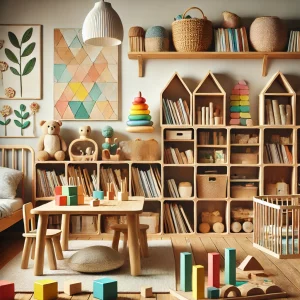
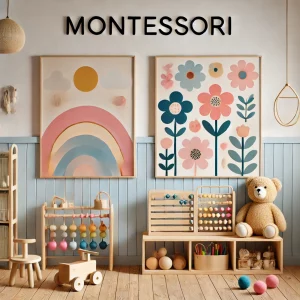
Furthermore, the concept of accessible learning shelves is quintessential in a Montessori environment. Organizing materials in a way that is inviting and reachable allows children to take initiative in their play and learning. For instance, a parent can arrange various activities—such as puzzles, books, or art supplies—on low shelves that children can access independently. This setup encourages them to choose what they want to explore, fostering a sense of ownership over their learning process.
The School Environment
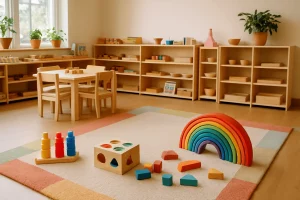
In the school setting, Montessori education unfolds uniquely, with a focus on respect, freedom, and a structured environment designed to foster exploration. Montessori schools often have multi-age classrooms that allow children to learn from one another, promoting collaboration and social skills development.
Adapting the Classroom for Independence
A critical aspect of the Montessori approach is its adaptability to students’ needs. For example, a skilled teacher may observe that certain students struggle with concentration during traditional lessons. In response, she might implement smaller groups where children can engage with hands-on materials, allowing them to learn at their own pace. This adaptability encourages self-discovery and reinforces their intrinsic motivation.
Learning through Self-Regulation
Moreover, self-regulation is a hallmark of Montessori education. When presented with various materials, children are encouraged to monitor their progress and decide when to move on to different tasks. For example, a student engrossed in building a complex structure using blocks learns to evaluate the time spent on one activity versus another, developing crucial self-assessment skills.
Emotional Development
Emotional development is another essential element in Montessori education, fostering resilience, empathy, and a strong sense of self. The emphasis on emotional intelligence equips children with the tools to navigate social interactions and manage their feelings effectively.
Encouraging Empathy through Group Activities
Group activities in a Montessori classroom not only promote collaboration but also provide opportunities for students to cultivate empathy. For instance, during a class project when children must share roles and responsibilities, they learn to communicate effectively and understand each other’s perspectives. This practice nurtures a supportive classroom community where children feel valued and heard.
Promoting Self-Reflection and Mindfulness
Finally, implementing practices like daily reflections can enhance emotional development. Teachers might encourage students to end their day with a moment of mindfulness, sharing what they learned and how they felt throughout the day. This practice allows students to gain insight into their emotional responses and better understand themselves.
Resources for Montessori Education
For a deeper dive into the principles of Montessori education, we invite you to check out our guía completa sobre la pedagogía Montessori. This comprehensive guide offers a holistic view of how Montessori can transform the learning experience. Additionally, you can refer to our introducción a la pedagogía Montessori for foundational concepts that will empower you as a parent or educator.
Conclusion
Embracing Montessori education offers a fulfilling journey for both parents and educators. Through intentional home environments, adaptive school settings, and a strong focus on emotional development, children flourish into independent and thoughtful individuals, fully prepared for their future endeavors. With tools like our Montessori locator and the insights available at Montessori Maria, you are well on your way to exploring the many benefits this transformative educational approach has to offer. Dive into our latest articles, such as Understanding the Montessori Method and Understanding Maria Montessori, for more insights and practical strategies.
Together, we can foster environments that inspire and cultivate a love for learning, promoting the core values of Montessori education and ensuring that children grow into autonomous and confident individuals.