Understanding Montessori Education
Parents and educators around the globe are increasingly searching for Montessori education opportunities, often using phrases like “Montessori near me” or “Montessori school near me” to find suitable options. The Montessori approach emphasizes independence, respect for a child’s natural development, and a child-centered educational environment. To assist those searching for these opportunities, our website offers a Montessori locator tool, making it easier to find educational resources nearby. You can explore tools such as Montessori near me and Montessori school near me.
The Home Environment
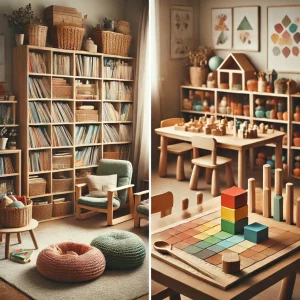
Creating a Montessori-inspired home environment is crucial for promoting autonomy and independence in children. Parents can transform their living spaces into nurturing learning environments by applying Montessori principles.
Creating a Montessori-Inspired Kitchen
One of the first spaces that can benefit from a Montessori approach is the kitchen. By incorporating low shelves stocked with child-sized utensils and ingredients, children can learn to cook and prepare meals, fostering independence and self-sufficiency. Imagine a child standing on a small stool, confidently chopping vegetables for a salad using a safe, child-friendly knife. This not only teaches practical skills but also encourages responsibility and self-esteem.
Adaptation for Independence
Another example is adapting furniture and materials to suit children’s heights and capabilities. For instance, a family can modify a bathroom space by placing a small step stool next to the sink, allowing children to wash their hands without assistance. This small change promotes self-reliance and gives children a sense of ownership of their daily routines, vital aspects of the Montessori philosophy.
The School Environment
In the Montessori school environment, the role of the educator shifts significantly. Montessori teachers prepare the classroom, observe student interactions, and guide learning without direct interference.
Prepared Classroom Environment
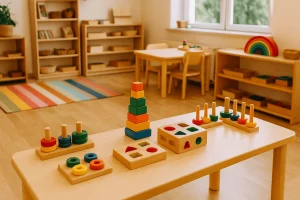
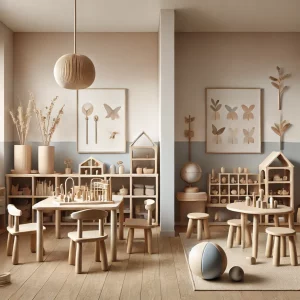
In a Montessori classroom, shelves are organized and materials are accessible to children. For example, a teacher might arrange shelves by subject area, ensuring that each item can promote exploration and learning. Children are encouraged to select activities that interest them, such as a practical life exercise involving pouring and transferring objects. This helps them to develop fine motor skills and concentration while fostering a love for learning.
Encouraging Self-Regulation
Another key characteristic of a Montessori school is that it encourages self-regulation among students. A student might work on a challenging puzzle for an extended period, learning the valuable lesson of persistence. When the same child struggles with frustration, a teacher observes quietly, ready to step in only when necessary, allowing the student to experience natural consequences and develop emotional resilience.
Emotional Development
The Montessori approach has a robust framework for fostering emotional development in children, focusing on respect, empathy, and self-awareness.
Collaboration and Community
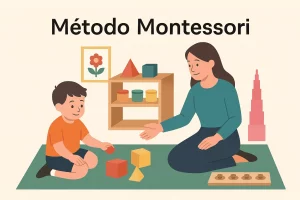
In a Montessori setting, mixed-age classrooms promote collaboration. Younger students can learn from older peers, while older students reinforce their understanding by teaching concepts to younger classmates. For instance, a 6-year-old might teach a 3-year-old how to use a sorting activity, enhancing both their social skills and understanding of concepts. This collaborative environment nurtures a sense of community and belonging.
Encouraging Emotional Awareness
Teachers often introduce strategies to help children articulate their feelings and navigate challenges. When conflicts arise, students might engage in problem-solving discussions prompted by their teacher, learning to express their emotions in constructive ways and develop empathy towards one another. Such skills are vital for lifelong emotional intelligence.
Resources and Tools
We understand that navigating the world of Montessori can sometimes feel overwhelming. For those interested in delving deeper into Montessori principles, we invite you to explore our guía completa sobre la pedagogía Montessori, which offers a comprehensive overview of the Montessori method. Alternatively, if you are new to this style of education, our introducción a la pedagogía Montessori provides a gentle guide for parents seeking educational alternatives for their children.
For further help, the Montessori Maria platform and its AI assistant MarÍA is a valuable tool. It provides personalized assistance for parents and educators looking to implement Montessori principles in their homes and classrooms.
Conclusion
Choosing Montessori education is a significant step toward fostering independence and emotional intelligence in children. Whether at home or in school, understanding the structure and principles of Montessori can lead to a rewarding experience for both parents and educators alike. Explore more articles on Montessori pedagogy and insights on our website here to continue your journey into this transformative educational method.