Understanding the Montessori Philosophy
As parents and educators seek the best educational options for children, phrases like “Montessori near me” or “Montessori school near me” are commonly searched. This reflects a growing interest in Montessori education, which champions child-centric learning environments. Our website provides a Montessori locator tool designed to assist families in finding local Montessori schools and resources. In this article, we will delve into three essential aspects of Montessori education: the home environment, the school environment, and emotional development.
The Home Environment
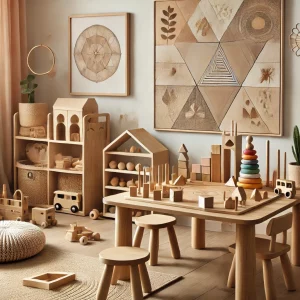
Creating a Montessori-inspired home environment promotes independence and hands-on learning. Parents can implement simple changes that align with Montessori principles, thereby enhancing their child’s developmental journey.
Montessori-Inspired Kitchen Spaces
One practical example of a Montessori home space is the kitchen. Parents can create a child-friendly zone by introducing low shelves filled with utensils, plates, and cooking materials. For instance, a small table can be set up with a pitcher, a sponge, and a small basin of water where children can practice pouring. Such activities not only teach practical life skills but also foster a sense of responsibility and accomplishment.
Organizing Learning Materials
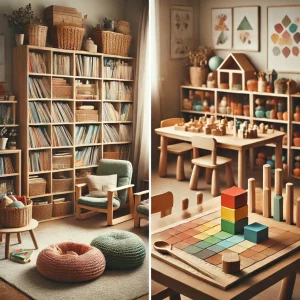
In addition, organizing shelves in a way that promotes independence is key. By demonstrating how to reach for materials and showing children where items belong, parents like the Smiths can help their two-year-old, Mia, develop skills in self-management and tidiness. This structured element prepares children for the desired independence emphasized in an introduction to the Montessori pedagogy.
The School Environment
In Montessori classrooms, education is tailored to meet the needs of the individual learner. This is different from traditional education, which can often be aimed at the average student.
Classroom Set-Up for Independence
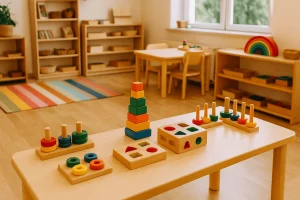
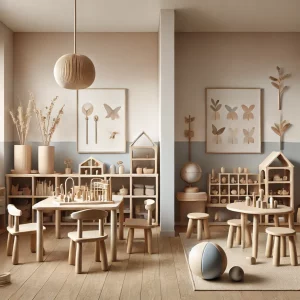
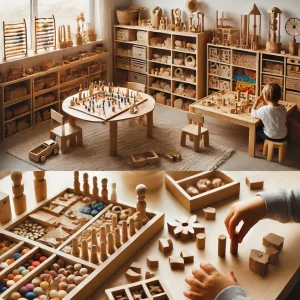
A classic example can be seen in the way a teacher, Ms. Robinson, organizes her classroom. She adapts the shelves to ensure students can access materials independently. Instead of stacking items that require adult intervention, she arranges them so that children can easily choose their activities. This not only encourages them to explore freely but also instills a sense of ownership over their learning.
Fostering Self-Regulation
Moreover, the Montessori methodology significantly supports emotional development, especially regarding self-regulation. For instance, in Ms. Robinson’s class, children learn to identify their feelings and manage conflicts through guided conversations and peer mediation. This practice cultivates emotional intelligence, prepping students for future personal and social interactions.
Emotional Development Through Montessori Education
Emotional development is a cornerstone of Montessori education, encouraging children to understand and express their feelings effectively.
Encouraging Empathy and Cooperation
In a Montessori setting, themes of empathy and cooperation emerge naturally. Children are often observed collaborating on projects, which equips them with vital social skills. For instance, in a cooperative activity involving planting a garden, children must communicate their ideas and work together towards a common goal, learning to compromise along the way. This approach not only fosters connections but also teaches them the importance of community.
Building Self-Confidence
Through daily tasks that promote self-sufficiency, such as choosing their tasks or helping prepare a snack, Montessori education builds self-confidence in children. When a child successfully completes a goal, such as tying their shoes or finishing a puzzle, the boost in their self-esteem is palpable, illustrating one of the many benefits of the Montessori approach.
Resources for Parents and Educators
For those looking to delve deeper into Montessori education, several resources are available. Our website features a comprehensive guide on Montessori pedagogy that outlines these principles in detail. Additionally, the Montessori Maria platform and its AI assistant MarÍA provides users with tailored support and information on universal principles of Montessori education.
In conclusion, the Montessori approach fosters a nurturing environment where independence, self-regulation, and emotional development thrive. By creating supportive spaces in both home and school settings, parents and educators can significantly enhance a child’s learning journey. As you navigate your options, remember to search for “Montessori near me” or “Montessori school near me” to find resources that align with your educational philosophy.
Recent Articles
To stay updated on Montessori education, check out these insightful articles:
- Understanding Maria Montessori: A Guide for Parents and Educators
- Understanding Montessori: A Comprehensive Guide for Parents
- Understanding Montessori Pedagogy: A Comprehensive Guide for Parents and Educators
- Understanding Montessori Education: A Comprehensive Guide for Parents and Educators
- Understanding the Montessori Method: A Comprehensive Guide for Parents and Educators