Understanding the Search for Montessori Education
Around the globe, parents and educators are increasingly turning to Montessori education as a transformative approach to learning. Phrases like “Montessori near me” or “Montessori school near me” are commonly searched online as families seek suitable environments that foster independent learning and emotional growth. Luckily, our website provides a Montessori locator tool that can help you find schools and resources in your area, showcasing examples such as Montessori school in Terni, Umbria. In this article, we will explore how the principles of Montessori education can be implemented at home and in school, with a focus on emotional development.
Creating a Montessori Environment at Home
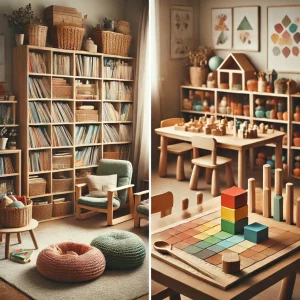
The Montessori approach can easily translate into the home environment, allowing parents to support their child’s development through thoughtful design and organization. A critical aspect of this involves setting up a space that encourages independence and exploration.
Montessori-Inspired Kitchen Space
Imagine transforming your kitchen into a functional, child-friendly space. Parents can lower kitchen shelves to make safe, healthy snacks accessible for children, thus encouraging them to serve themselves. This simple act of independence not only empowers children but also teaches responsibility. When children can choose their snacks and prepare simple meals, they gain valuable life skills and confidence in their abilities. Check out the understanding of the Montessori method to help you integrate these practices seamlessly.
Adapted Play Areas
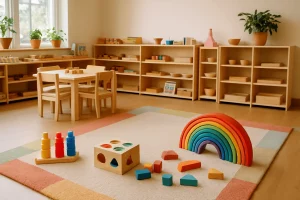
Another example is creating play areas that adapt to a child’s size and abilities. By organizing toys within reach and incorporating open-ended materials that foster creativity, children can choose what, when, and how they want to play. This promotes autonomy and self-regulation, aligning with key Montessori principles. For a deeper understanding of how to implement this approach, consider exploring our introduction to Montessori pedagogy.
Implementing Montessori Education in School
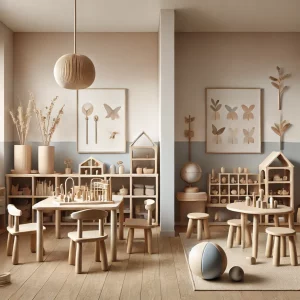
In a Montessori school, the environment is meticulously designed to facilitate self-directed learning. Teachers play an instrumental role in this process through their methods and interactions with students.
Teacher Adaptations for Independence
Consider a scenario in a Montessori classroom where a teacher observes a group of students struggling to find materials. To foster independence, the teacher adapts the shelves by labeling each item clearly and ensuring that all materials are accessible. By doing this, the teacher empowers students to select the materials they need for their activities, cultivating a sense of responsibility and self-sufficiency.
Fostering Emotional Development
Emotional development is a cornerstone of Montessori education. Children are encouraged to express their feelings and resolve conflicts independently. For instance, a child struggling with frustration over a challenging task might be guided by a teacher to take a moment to breathe and reflect. This practice not only helps with self-regulation but also instills lifelong emotional intelligence. Understanding these emotional aspects is necessary for educators, and you can read more in our comprehensive guide.
Emotional Development: Cultivating Resilience and Empathy
An essential component of Montessori education is the focus on developing emotional skills that promote resilience and empathy in children. Parents and educators can work together to nurture these qualities, ensuring a holistic approach to a child’s development.
Encouraging Self-Regulation Techniques
A practical example can be found in the concept of ‘mindful moments’ incorporated into class routines. Teachers might guide students to engage in breathing exercises when they feel overwhelmed, teaching them to recognize and manage their emotions effectively. Such techniques not only help students cope with their feelings but also prepare them for challenges outside the classroom.
Promoting Empathy Through Group Activities
Group activities in a Montessori classroom are designed to encourage collaboration and communication. By working together on projects, children learn to appreciate different perspectives and develop empathy for their peers. This collaborative spirit is integral to creating a supportive community of learners, which is vital in today’s diverse world. For parents looking to foster these skills at home, using the guide for parents and educators can provide helpful insights.
Conclusion
As we conclude, it’s vital to recognize that Montessori education is more than just a method; it’s a philosophy that nurtures independent learning, emotional development, and resilience. Whether you’re searching for a Montessori school nearby or looking to integrate these principles into your home, the journey toward fostering a Montessori-inspired environment can be incredibly rewarding for both parents and educators. Remember, the Montessori Maria platform and its AI assistant MarÍA is always available to support your exploration of this transformative educational path.