Introduction
Parents and educators around the world are constantly seeking effective educational methods for their children, often searching phrases like “Montessori near me” or “Montessori school near me” when looking for Montessori options in their vicinity. This demonstrates a growing understanding of the Montessori method and its benefits for child development. Our website includes a Montessori locator tool that helps you find local Montessori resources, like Montessori near me and Montessori school near me.
Home Environment
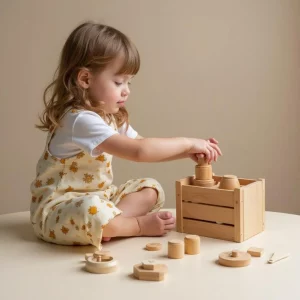
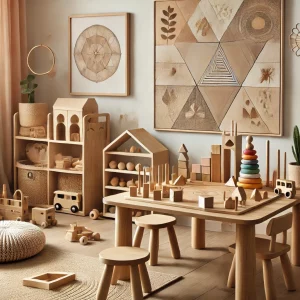
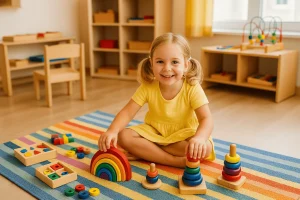
Creating a Montessori-inspired environment at home is crucial for reinforcing the principles of child-led learning and independence. In a Montessori home, children have access to materials that are appropriate for their developmental stages, encouraging them to explore and learn at their own pace.
Designing Montessori Spaces
Consider a family who decides to adapt their kitchen into a Montessori-friendly space. They lower the kitchen counters, providing child-sized tools and ingredients that allow children to independently prepare snacks. This not only gives children a sense of ownership but also teaches them responsibility and basic life skills.
Learning Materials
In the living area, a parent could introduce a reading nook filled with a variety of books categorized by topics that interest their child. This encourages quiet time and fosters a love for reading. By integrating activities like these, families create environments rich in opportunity for learning. To learn more about the foundational ideas behind Montessori education, you can check out our introduction to Montessori pedagogy.
School Environment
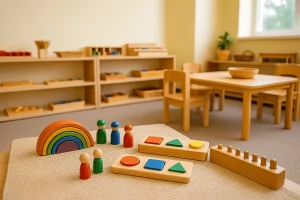
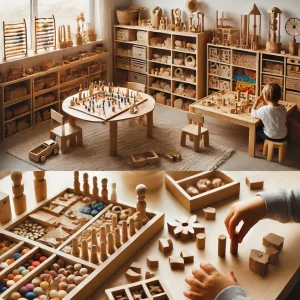
When children transition to a Montessori school setting, they encounter an environment tailored to promote autonomy and responsibility. The classroom layout is intentionally designed to encourage self-directed and collaborative learning.
Teacher’s Role
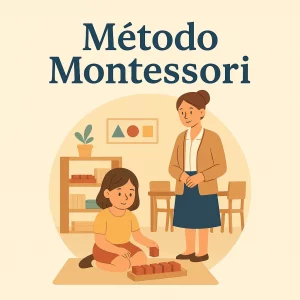
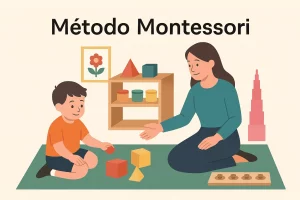
In a Montessori classroom, the teacher, often termed a guide, plays an essential role in observing and facilitating rather than dictating the learning process. A teacher might adapt the shelves and materials based on the interests of the children. For instance, if several children show interest in biology, the teacher could curate a selection of materials that allows them to delve deeper into the subject. This responsiveness not only supports independence but also fosters intrinsic motivation.
Community and Collaboration
The communal aspect of a Montessori classroom allows children of different ages to work and learn together. A younger student might benefit from observing an older peer navigate complex tasks, thereby learning self-regulation and patience. These interactions help to cultivate a sense of community and collaboration, key components of the Montessori approach.
Emotional Development
One of the key outcomes of Montessori education is the emotional development of the child. Since the method emphasizes self-direction, children learn to manage their emotions and develop resilience.
Self-Regulation
In a Montessori school, a child might face a conflict during group work. Instead of an adult intervening immediately, children are encouraged to resolve their disagreements through discussion. This practice not only enhances their communication skills but also fosters emotional intelligence, allowing them to identify and express their feelings constructively.
Building Confidence
When children take on responsibilities within their community—whether by serving food or caring for classroom pets—they gain a sense of purpose and confidence. For instance, a child tasked with watering plants learns about the importance of care and routine, contributing to both their emotional safety and self-esteem.
Conclusion
The Montessori method provides a holistic approach to education, nurturing not just the academic skills of children, but also their emotional intelligence and social skills. This comprehensive educational journey can start right at home, with simple changes in the environment promoting independence and responsibility. As you venture into the world of Montessori education, resources like this comprehensive guide may give you deeper insight into the principles of the Montessori philosophy.
If you’re on the lookout for local resources, using our Montessori locator tool can help you find pertinent options that align with your educational goals. Every parent and educator has the opportunity to explore and implement Montessori principles—whether at home or in school—creating a nurturing environment that fosters lifelong learners.
For further exploration, don’t hesitate to delve into articles like Understanding the Montessori Method and Discovering Montessori. These links will guide you deeper into the transformative experience of Montessori education.
As you consider implementing these principles in your own life, remember the remarkable impact that María Montessori’s vision continues to bring to educational environments today. To celebrate her legacy, explore more about María Montessori and how her teaching strategies can still influence modern schooling.
Together, let us champion the unique educational journey that Montessori presents, ensuring our children grow into confident, compassionate individuals ready to explore the world.