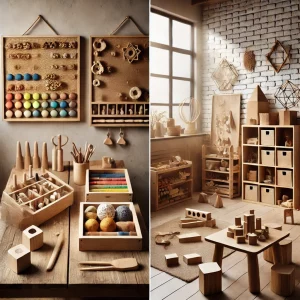
Understanding Montessori Education
As parents and educators seek holistic and nurturing learning environments, many find themselves typing in phrases like “Montessori near me” or “Montessori school near me.” This search reflects a growing awareness of the benefits of Montessori education, a method rooted in respect for the child’s natural development. For those interested in learning more, our website features a Montessori locator tool to help you find nearby Montessori options, such as schools and programs, like in Terni, Umbria.
Creating a Montessori Home Environment
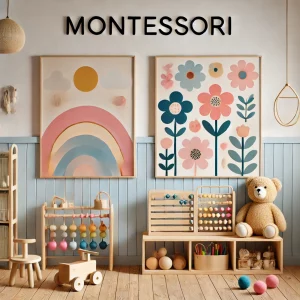
To start embracing the principles of Montessori education at home, the environment plays a pivotal role. A home that encourages independence, curiosity, and self-directed learning aligns well with the fundamentals of Montessori pedagogy.
Designing Montessori-inspired Spaces
One practical step parents can take is to adapt the home’s layout to foster independence among children. For example, creating a Montessori-inspired kitchen space involves making items accessible. Lowering kitchen utensils or providing child-sized tools empowers children to participate in food preparation. This approach not only builds confidence but also enhances practical life skills.
Making Learning Materials Accessible
Books and educational materials should be readily accessible for children. Consider placing a small bookshelf at their height with a variety of age-appropriate books. This simple adjustment invites children to browse, read, and engage with the material spontaneously. It nurtures a love of learning and creativity, which are central to the Montessori philosophy.
Encouraging a Montessori School Environment
In a Montessori school, the environment continues to promote autonomy and choice. Children are encouraged to select their activities independently, allowing them to learn at their own pace.
Independence through Structured Choice
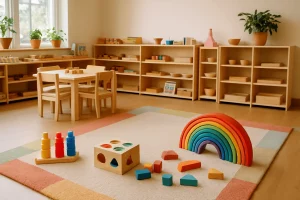
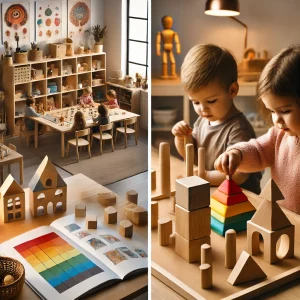
In a Montessori classroom, teachers often adapt environments to nurture independence. For instance, a teacher might arrange shelves with activities that promote self-regulation, such as sensorial materials, mathematics tools, and language resources. Children can choose their materials, fostering decision-making skills and personal responsibility.
Cultivating Emotional Awareness
Another significant aspect of Montessori education is emotional development. Skilled Montessori educators promote awareness by allowing children to express feelings freely. For example, during circle time, teachers can encourage children to discuss emotions, teaching them to identify and articulate their feelings. This practice not only builds emotional intelligence but also reinforces social skills vital for budding relationships.
Integrating Emotional Development in Education
Emotional development is integral to the Montessori approach. The curriculum prioritizes creating a safe space where children can explore their emotions and learn empathy.
Fostering Self-regulation in Students
For example, a student might learn techniques to calm down during conflicts, such as taking deep breaths or using a “calm-down corner” equipped with soft materials. The boundaries established in a Montessori program help children understand their emotions, improving their self-regulation and conflict resolution skills.
Emotional Intelligence and Peer Interaction
Moreover, by promoting peer-to-peer interactions, children develop their emotional and social skills organically. Cooperative projects or group activities foster a sense of community and responsibility. Children learn to celebrate each other’s successes and support one another during challenges, encapsulating the essence of emotional intelligence.
Resources for Montessori Education
If you’re keen on diving deeper into Montessori education, visit the Montessori Maria platform and its AI assistant MarÍA for tailored guidance. From navigating the principles of Montessori to finding schools nearby, there are abundant resources to assist parents and educators alike.
Explore Further
To explore additional insights, consider checking out our guía completa sobre la pedagogía Montessori for a transformative perspective on educational strategies. This comprehensive guide serves as a valuable tool for those interested in understanding the Montessori approach in-depth.
Conclusion
In conclusion, whether you are a parent looking to create a conducive home environment or an educator striving to implement Montessori principles in the classroom, the resources available can guide you. With the right support and understanding, both children and adults can thrive in the enriching world of educacion montessori. For more insightful articles, review our collection to enhance your understanding of Montessori practices: Understanding Montessori Method(https://montessorimaria.com/en/understanding-the-montessori-method-a-guide-for-parents-and-educators-22/), Maria Montessori Guide(https://montessorimaria.com/en/maria-montessori-a-guide-for-parents-and-educators/), Comprehensive Guide for Parents(https://montessorimaria.com/en/a-comprehensive-guide-for-parents-understanding-montessori-and-finding-schools-near-you/), Understanding Montessori Pedagogy(https://montessorimaria.com/en/understanding-montessori-pedagogy-a-comprehensive-guide-for-parents-and-educators-8/), and Comprehensive Guide to Montessori Education(https://montessorimaria.com/en/a-comprehensive-guide-to-montessori-education-understanding-educacion-montessori-for-parents-and-educators/).