Understanding the Montessori Journey
In today’s fast-paced world, many families embark on their educational journey by searching for “Montessori near me” or “Montessori school near me.” This quest often leads them to discover the transformative approach of Montessori pedagogy. At the Montessori Maria website, we provide an extensive global Montessori locator to assist families in finding quality Montessori education options nearby. For example, you can explore options in Oberursel, Germany, by visiting our page here.
The Principles of Montessori Pedagogy
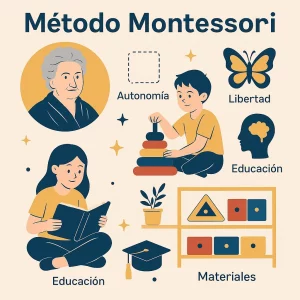
Montessori pedagogy is grounded in a set of principles that focus on nurturing the child’s natural desire to learn. Key principles include a prepared environment, autonomy, observation, and sensory learning, each vital for fostering independent and engaged learners.
The Prepared Environment
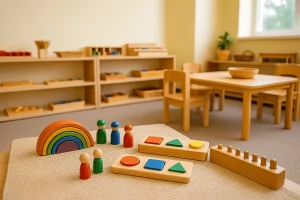
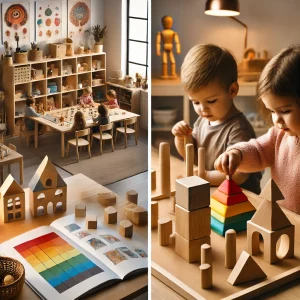
In Montessori classrooms, the prepared environment is meticulously designed to cater to the developmental needs of children. For instance, classrooms are equipped with various materials that promote exploration and discovery. Imagine a traditional classroom transforming into a Montessori environment: desks are arranged to allow for movement and collaboration, shelves are stocked with hands-on materials, and areas are designated for quiet reflection and group work. This setup encourages children to choose their activities and learn at their own pace.
Autonomy
Similar to the ways they learn to walk, speak, and think, children thrive when given autonomy in their learning. A student teacher planning their first Montessori environment might choose to implement choices for children, allowing them to select what materials to work with and when to engage in activities. This freedom fosters self-motivation and responsibility—qualities essential for a lifelong love of learning. The concept of autonomy in Montessori pedagogy is further explored in our introduction to Montessori pedagogy.
Observation
Observation is a fundamental practice in Montessori pedagogy. Educators are trained to observe children carefully to understand their interests, capabilities, and needs. This knowledge allows teachers to tailor learning experiences and introduce new materials at the right time. For example, a teacher might notice a child’s fascination with animals and, as a result, create an engaging lesson on different species or habitats. By honing their observation skills, educators can cultivate a rich, responsive learning environment.
Sensory Learning
Sensory learning is a key element of Montessori education. Montessori materials are designed to stimulate the senses, allowing children to learn through hands-on experiences. For example, a traditional science lesson about the properties of solids and liquids can be transformed in a Montessori environment. Children could explore various materials with different textures, weights, and colors—engaging their senses as they make scientific discoveries.
Practical Application of Montessori Principles
Applying Montessori principles doesn’t require being in a formal school setting. Parents and educators can incorporate these ideas into everyday life or shift the approach in traditional classrooms. For instance, a parent may create a Montessori-inspired home environment by including open shelves with learning materials, offering choices for activities, and allowing for free exploration time.
Transforming a Traditional Classroom
In a traditional classroom transitioning to a Montessori model, teachers can initiate changes by rearranging the classroom layout and introducing Montessori materials. Instead of rows of desks, they can create learning stations with various materials and activities. This not only encourages collaboration but also supports different learning styles. Teachers can also introduce periods of uninterrupted work time, allowing students the freedom to dive deep into their interests without constant interruptions.
Planning a Montessori Environment for Student Teachers
For student teachers planning their first Montessori environment, starting small is key. They could choose to set up a single area of the classroom focusing on one subject, like math or language. By selecting appropriate Montessori materials—such as bead frames for math—they can create engaging lessons that encourage exploration and curiosity. This hands-on approach greatly enhances student engagement and learning outcomes.
Resources and Further Learning
As you continue your exploration of Montessori pedagogy, consider accessing more in-depth resources provided on the Montessori Maria website. There are numerous guides and articles available for parents, educators, and teacher-training students. For example, our Unlocking the World of Montessori Education article dives deep into applying Montessori principles in practical settings. You can also read about the tenets of Montessori in our Understanding the Montessori Method guide.
The Legacy of María Montessori
Understanding the roots of Montessori education also means diving into the life and work of María Montessori, whose innovative work transformed educational practices around the globe. Her philosophy emphasizes respect for the child as an individual capable of self-directed learning, a principle that still resonates in classrooms worldwide today.
Final Thoughts
Montessori pedagogy offers a wealth of insights for parents, educators, and students seeking a more child-centered approach to learning. By prioritizing a prepared environment, autonomy, observation, and sensory learning, we can facilitate an enriching educational experience for children. As you seek resources and communities that align with the Montessori philosophy, remember we have a comprehensive list of Montessori schools on our site. Explore your options by visiting our locator at Montessori near me.
For additional reading, don’t miss our articles like The Montessori Method and Understanding Montessori, which dive deeper into the approaches and benefits of Montessori education. By harnessing these principles, we can create better learning environments for all children.