Understanding the Montessori Approach
Many families embarking on their educational journey often find themselves searching for terms like “Montessori near me” or “Montessori school near me”. This quest leads them to discover the profound benefits of Montessori pedagogy. For those looking for a Montessori school, our website offers a global Montessori locator at Montessori near me. Examples of local Montessori resources can also be found, such as the tailored listing for Oberursel, Germany, which you can explore at Montessori in Oberursel.
The Core Principles of Montessori Pedagogy
At the heart of Montessori education lies a set of fundamental principles that define its unique methodology. These principles include the prepared environment, autonomy, observation, and sensory learning. Each principle plays a crucial role in developing a child’s natural curiosity and love for learning.
The Prepared Environment
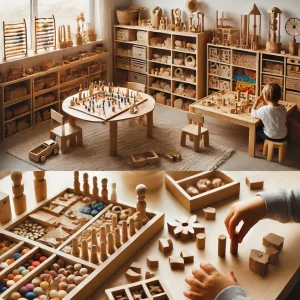
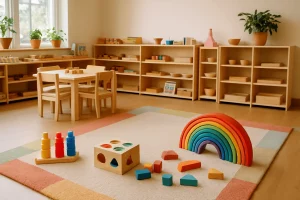
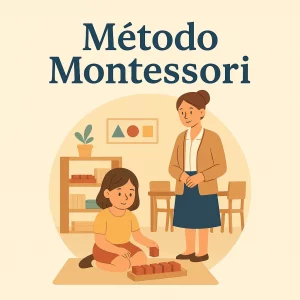
The prepared environment in a Montessori setting is designed to facilitate independent learning and exploration. For example, imagine a traditional classroom being adapted with appropriately-sized furniture, learning materials within easy reach, and a child-friendly layout. By organizing the space with purpose, teachers can encourage children to make choices and engage in meaningful activities. A well-prepared environment allows children to learn at their own pace, fostering a sense of responsibility and self-discipline.
Encouraging Autonomy
Autonomy is a vital component of Montessori pedagogy. Students are given the freedom to choose their activities, which nurtures decision-making and promotes self-motivation. In a real-life scenario, consider a student teacher planning their first Montessori environment. This teacher can create a schedule that allows children to select their work, providing them with a sense of ownership. As a result, students become involved in their learning journey, cultivating a lifelong passion for knowledge.
Observation as a Teaching Tool
Observation is another essential element of the Montessori approach. Educators learn to closely observe children in their environment to understand their interests, strengths, and challenges. By doing so, teachers can tailor their lessons to meet individual needs. For instance, a teacher may notice a child fascinated by water play and then introduce activities related to measurements, pouring, or even simple science experiments. This adaptability enhances the learning experience, ensuring that lessons are relevant and engaging.
Sensory Learning
Montessori education emphasizes sensory learning through hands-on activities. These activities engage children’s senses and foster a deeper understanding of concepts. An excellent example of sensory learning is the use of tactile materials to teach math concepts. For instance, young learners can use colorful beads to grasp the concept of counting, addition, and even subtraction. By manipulating physical materials, they can visualize abstract ideas, making learning more impactful.
Implementing Montessori Principles
For parents and educators, understanding and implementing Montessori principles can significantly enhance children’s learning experiences. Integrating these principles begins with creating a well-organized and welcoming environment. Here are some practical strategies:
1. Creating a Welcoming Space
Ensure that learning spaces are inviting, safe, and accessible. Use child-sized furniture and arrange materials neatly on shelves, enabling children to select resources independently.
2. Freedom within Limits
While autonomy is vital, it’s also important to establish clear boundaries. Children should understand the expectations and rules within the learning environment, allowing them to thrive safely.
3. Fostering Collaboration
Encourage cooperative learning by facilitating group projects and pair work. This collaboration enhances social skills and allows children to learn from one another.
4. Continuous Observation
Regularly observe children to identify their interests and areas needing support. Use these insights to adapt lessons and resources to better suit their evolving needs.
Further Resources
For those looking for a comprehensive understanding of Montessori education, we encourage you to check out the guía completa sobre la pedagogía Montessori. Additionally, you can start with our introducción a la pedagogía Montessori to explore the foundational concepts of this transformative approach.
The Legacy of María Montessori
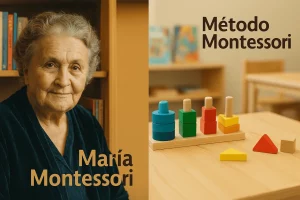
To truly understand Montessori pedagogy, one must appreciate the contributions of María Montessori. Her insights into child development and her innovative educational methods have influenced millions of educators and families worldwide.
Last Thoughts
As interest in Montessori education continues to grow, it’s essential for parents, educators, and student teachers to explore these pedagogical principles. By visiting the Montessori Maria website, you can access valuable insights and tools to enrich the learning experiences of children. Engage with the resources available and embrace the Montessori philosophy to support effective, child-centered education.
To learn more about the transformative power of Montessori education, view our latest articles: The Transformative Power of Montessori Education, Understanding the Montessori Method, Understanding Maria Montessori, A Parents Guide to Montessori Education, and Understanding Montessori Education.