Understanding the Montessori Movement
In today’s fast-paced world, it’s not uncommon for families to search for “Montessori near me” or “Montessori school near me” as they seek educational guidance for their children. This quest often leads them to resources and communities dedicated to fostering an enriching learning environment. At Montessori Maria, we provide a comprehensive Montessori locator and helpful guides that simplify locating Montessori schools and resources in your area, ensuring that families can easily tap into the transformative power of the Montessori method.
A Brief Biography of María Montessori
Born on August 31, 1870, in Chiaravalle, Italy, María Montessori was the first female physician in Italy. Her early experiences with children, particularly underprivileged and disabled children, sparked her passion for education. In 1907, she opened her first school, the Casa dei Bambini (Children’s House), where she implemented her revolutionary teaching methods. These methods emphasized independence, respect, and a child-centered approach to learning. Over the years, Montessori’s educational philosophy gained international acclaim, leading to the establishment of Montessori schools worldwide and creating a lasting legacy in education. To delve deeper into her contributions, you can read about María Montessori y su legado.
Core Principles of the Montessori Approach
At the heart of the Montessori method is the belief that children are naturally curious and capable of self-directed learning. This philosophy fosters an environment where children can explore, experiment, and discover at their own pace. Key principles include:
- Independence: Encouraging children to make choices and take responsibility for their learning.
- Prepared Environment: Designing spaces that promote exploration and creativity.
- Respect for the Child: Acknowledging each child’s individuality and unique learning style.
- Collaboration: Fostering social interaction among peers to enhance learning experiences.
For parents and educators looking to understand more about these principles, our guide on the Montessori method offers valuable insights.
Implementing Montessori Principles in Real Life
Integrating Montessori principles into daily life can significantly enhance a child’s growth and independence. Below are practical examples for both educators and parents:
Reorganizing the Classroom
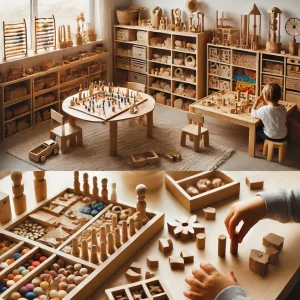
Imagine a teacher, Mrs. Smith, who decides to reorganize her traditional classroom into a Montessori-inspired environment. Instead of rigid desks, she sets up workstations with various learning materials accessible to all students. Each station is dedicated to different subjects—math, language, art, and science—allowing children to choose what they wish to work on. This setup encourages autonomy and self-discovery, aligning perfectly with the essence of pedagogía Montessori.
Creating a Montessori-Inspired Home
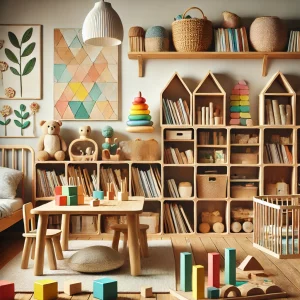
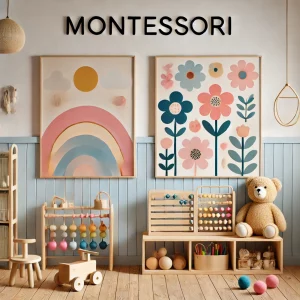
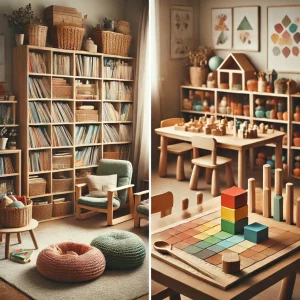
On the parental side, consider a scenario where parents, the Johnson family, prepare their child’s room with Montessori principles in mind. They create a space that fosters independence by placing a low clothes rack within reach, a child-sized table and chairs, and an open bookshelf filled with age-appropriate books. This organized, inviting environment allows their child to make choices about play and learning, instilling a sense of responsibility and confidence.
Finding Montessori Resources Near You
With the rising interest in Montessori education, many families are eager to find local resources that align with these principles. The pursuit of quality Montessori education often starts with a simple search for “Montessori near me.” Our website offers a curated Montessori locator, ensuring parents can find schools and programs that adhere to the Montessori philosophy in their vicinity.
The Role of the Educator
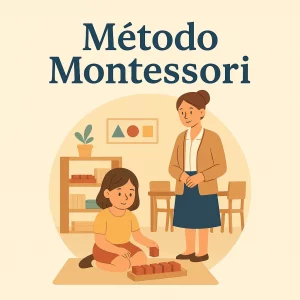
Educators play a crucial role in the Montessori method, acting as guides rather than traditional instructors. They observe students, understanding their interests and developmental stages, and then tailor learning experiences accordingly. This approach requires patience, adaptability, and a deep understanding of Montessori principles. For a comprehensive overview of how educators can prosper within this framework, check out our essential guide at The Essential Guide to Montessori Pedagogy.
Technology and the Montessori Method
In an age where technology plays a significant role in education, parents and educators may wonder how to integrate digital tools while adhering to Montessori principles. The key is balance—using technology as a supplement to real-world experiences. Interactive educational apps can support learning but should never replace hands-on activities, which are vital in a Montessori environment. Our AI assistant, MarÍA, located on the Montessori Maria website, can assist in navigating these modern challenges, providing suggestions on how to blend technology with traditional Montessori practices.
Why Choose Montessori Education?
Choosing a Montessori education can be a life-altering decision for your child. The method not only benefits children academically but also nurtures their social, emotional, and physical development. Montessori schools foster a love of learning and prepare students for lifelong success. Families seeking more information can refer to our comprehensive guide on Maria Montessori, which explores the method in depth.
Conclusion
In conclusion, understanding and integrating the principles of María Montessori into education, whether at home or in the classroom, can pave the way for a more enriching and fulfilling learning experience for children. As you embark on this journey, remember to utilize resources like the Discovering Montessori article, along with our locator to find nearby Montessori options. The path to successful education starts with informed decisions, and we encourage you to explore all that the Montessori method has to offer.