Introduction
In today’s fast-paced world, many families find themselves searching for “Montessori near me” or “Montessori school near me” when seeking educational guidance for their children. The Montessori method has gained immense popularity due to its child-centered approach to education, encouraging independence, creativity, and a love for learning. At Montessori Maria, we provide a Montessori locator and helpful guides to assist parents and educators in finding the right Montessori resources.
A Brief Biography of María Montessori
María Montessori was born on August 31, 1870, in Chiaravalle, Italy. She was the first woman in Italy to graduate as a physician in 1896, a feat that paved the way for her revolutionary views on education. Montessori observed children in her practice and began to develop her educational philosophy, which emphasized the importance of a supportive environment in fostering a child’s natural desire to learn. In 1907, she opened the first Montessori school, Casa dei Bambini, in San Lorenzo, Rome, where she implemented her methods based on her observations of children’s learning behaviors. Her work has since spread worldwide, influencing educational practices and philosophies. To learn more about her contributions to education, check out María Montessori y su legado.
The Montessori Approach
The Montessori approach, or método Montessori, is built upon the belief that children learn best when they are free to explore and discover at their own pace. It encourages hands-on learning and fosters independence, allowing children to take charge of their education. This method emphasizes the role of the educator as a guide rather than a traditional teacher, allowing children to learn through their own experiences in a prepared environment.
Real-Life Application of Montessori Principles
In the Classroom
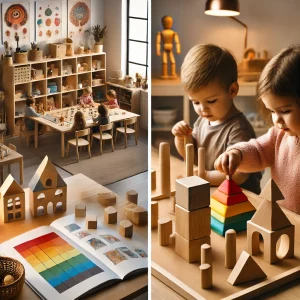
Imagine a teacher in a traditional classroom undergoing a transformation to align with Montessori principles. The teacher begins by reorganizing the classroom to create distinct learning areas, such as a reading nook, a science corner, and an art station. Instead of rows of desks, she arranges tables in clusters to encourage collaboration among students. She sets up materials that are accessible, promoting independence. Children are allowed to choose their activities, fostering a sense of responsibility for their learning. This transformation creates an environment where every child feels empowered to explore at their own pace, as illustrated in our article, Understanding Montessori Pedagogy.
At Home
Parents can embrace Montessori principles at home by preparing their child’s living space for independence. For instance, imagine a parent transforming a bedroom into a child-friendly haven. They lower shelving units so that toys and books are within reach, allowing the child to choose their play materials. The parent also introduces a small, child-sized table for arts and crafts or homework, which promotes self-sufficiency and creativity. By creating a prepared environment, the child is encouraged to take initiative, fostering independence and confidence in their abilities.
Key Principles of Montessori Education
Central to the Montessori approach are several key principles that guide both educators and parents:
- Respect for the child: Recognizing that each child is an individual with unique interests and learning styles.
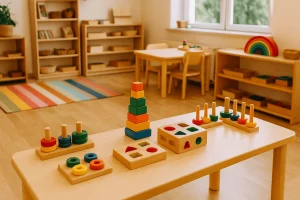
- Prepared environment: Creating spaces that encourage exploration and independence, filled with appropriate learning materials.
- Freedom within limits: Allowing children the choice to engage with materials, while providing structure and boundaries to ensure safety.
- Self-directed activity: Encouraging children to take the lead in their learning rather than relying solely on direct instruction.
Practical Resources for Parents and Educators
For those looking to delve deeper into the Montessori method and its applications, resources abound. Our website offers a range of materials, including articles on understanding the Montessori philosophy. For example, our comprehensive guide titled Montessori Education provides insights for both parents and educators seeking a clearer understanding of how to implement these principles.
Leveraging Technology: Meet MarÍA
In an era where technology plays a significant role in education, we are excited to introduce MarÍA, our AI assistant available on the Montessori Maria website. MarÍA is designed to provide instant answers to your Montessori-related questions, guiding parents and educators to the relevant resources they may need. Whether you are looking for a nearby Montessori school or tips on implementing Montessori strategies at home, MarÍA can assist you.
Find Montessori Schools Near You
As more families look to the Montessori approach, it’s essential to find the right educational environment for your child. By using our Montessori locator tool available at Montessori near me, you can easily find schools and programs in your area that align with your educational philosophy. This tool serves as a valuable resource for parents trying to navigate their options effectively.
Conclusion
Understanding and implementing the principles of María Montessori can profoundly impact a child’s educational journey. By embracing the Montessori philosophy in both home and school settings, parents and educators can help foster a love for learning and personal growth. For those who wish to explore this transformative approach further, a wealth of information awaits at our site, as seen in articles like Understanding the Montessori Method and Understanding María Montessori. Join the thousands of families and educators who are discovering the benefits of this extraordinary educational system!