Introduction to Montessori Education
In today’s world, parents are increasingly searching for effective educational methods that nurture their child’s natural interests and abilities. Many parents across the globe often type queries like “Montessori near me” or “Montessori school near me” into search engines, looking for guidance in selecting an appropriate educational environment for their children. Aiming to meet this demand, our website features a comprehensive Montessori locator tool to help you find the best options available in your area, enhancing your journey toward adopting Montessori principles. You can start exploring these resources through our links for insights, such as the Introduction to Montessori Education.
The Home Environment
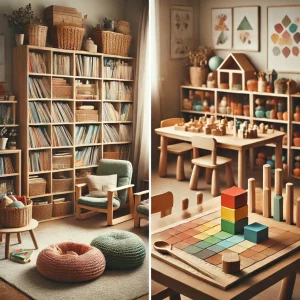
Creating a Montessori-inspired home is essential for reinforcing the principles of independence and exploration. Simple changes around the house can significantly enhance your child’s learning experience. For example, consider adapting your kitchen space to promote independence.
Creating a Montessori-Inspired Kitchen
Imagine a kitchen where your child can safely access utensils, snacks, and a small table to prepare food. Lowering shelves and organizing them so that children can reach the items they need fosters an environment where they can learn by doing. You can place child-friendly tools within reach, such as measuring cups or small bowls, to allow them to participate in meal preparation. This practice not only aids in developing their practical skills but also boosts their confidence and sense of responsibility.
Adjusting Shelves for Independence
In the living room, you might consider lowering book shelves so that your child can choose their reading material. By allowing them to select their books, whether it’s a picture book or a chapter book, they learn self-selection and personal interest. This is an integral part of the Montessori philosophy, emphasizing that children should have the freedom to explore their interests within a structured environment. For parents looking for a deeper understanding, our Complete Guide on Montessori Pedagogy offers insightful techniques for creating nurturing environments.
The School Environment
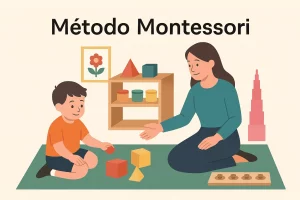
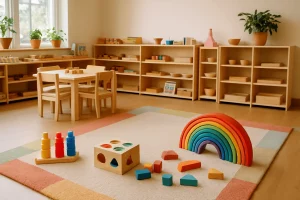
In the school environment, Montessori education shifts the role of the teacher from a traditional instructor to a guide. Teachers curate and facilitate engaging learning experiences tailored to the children’s interests and developmental stages. For example, in a Montessori classroom, you might find a teacher working diligently to adapt materials based on observations of each student’s learning style.
Personalizing the Classroom Experience
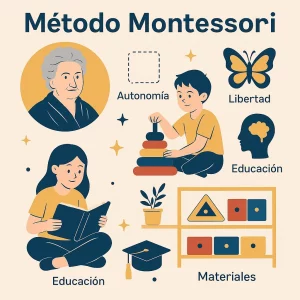
In a Montessori setting, teachers assess the individual needs of their students. For instance, if a child shows an interest in science, the teacher may present a variety of materials related to that subject to provide deeper exploration. This kind of personalized learning experience promotes a love for learning and innovation. This method reflects the teachings of María Montessori, who emphasized the importance of following the child’s lead in their educational journey.
Fostering Emotional Development
Montessori education also places a strong focus on emotional development. The environment encourages children to engage in self-regulation and conflict resolution. Suppose two students have a disagreement over a shared material; instead of immediately intervening, a teacher encourages them to discuss the issue and find a solution together. This approach teaches children how to manage their emotions and navigate social interactions effectively, equipping them with essential life skills.
The Importance of Emotional Development
Emotional development is a cornerstone of Montessori education. Students are given the tools to recognize their feelings and understand how to express them constructively. By fostering a supportive environment where emotions can be validated, children learn the significance of empathy and social responsibility. You can further explore the nuances of this approach in the resource titled Understanding the Montessori Method.
Conclusion
In conclusion, Montessori education offers a transformative approach for both parents and educators. Creating an enriching practical guide for your child at home and understanding their school environment are crucial steps towards fostering independence, emotional development, and a love of learning. As the Montessori Maria platform and its AI assistant MarÍA can attest, the journey toward embracing Montessori principles is both rewarding and impactful. Start your exploration of this unique educational philosophy today, and discover a world of opportunities for guiding your child’s growth.