The Search for Montessori Education
Parents across the globe are increasingly searching for Montessori education options, often typing phrases like “Montessori near me” or “Montessori school near me” into search engines to find quality learning environments for their children. This reflects a growing desire for educational sustainability and a focus on individuality in learning. Our website offers an invaluable Montessori locator tool to help you find local resources, with examples such as Montessori schools in your area. This article delves into different aspects of Montessori education, including home environments, school influences, and emotional development, providing concrete examples to help guide educators and parents alike.
The Home Environment: Creating a Montessori-Inspired Space
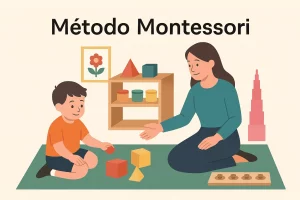
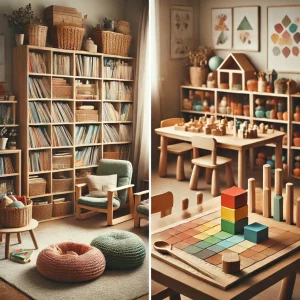
A Montessori home environment is an essential component in encouraging a child’s independence and intrinsic motivation. It involves tailoring living spaces to make them child-friendly while promoting self-discovery. This can start in the kitchen, an often overlooked area for fostering independence. For instance, a family can create a Montessori-inspired kitchen space by introducing small utensils and dishes that children can use themselves, allowing them to prepare simple meals or snacks.
Adapting Spaces for Independence
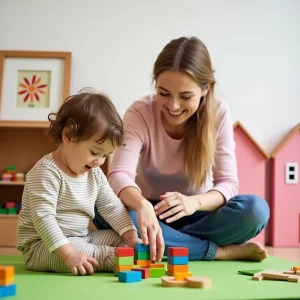
In a Montessori home, shelves can be adapted to suit a child’s height, filled with age-appropriate materials. For example, a teacher may arrange shelves in a classroom to enable children to access learning materials independently. This practice can be mirrored at home; parents can designate a “work” area where children can select their own materials and explore topics of interest without constant adult supervision. This independence fosters confidence, self-discipline, and considers the child’s developmental stage.
To further enhance the Montessori atmosphere at home, consider including natural materials and plants that encourage exploration and sensory experiences. For deeper insights, refer to our introduction to Montessori pedagogy.
The School Environment: Fostering Collaborative Learning
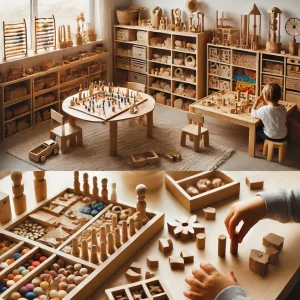
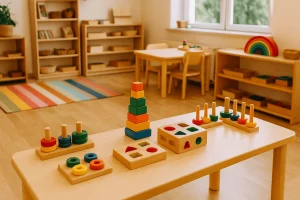
In the classroom, the principles of Montessori education are applied distinctly to create an organized, engaging environment for children. Classrooms are designed to facilitate self-directed learning. Each area within the classroom serves a specific purpose—from practical life skills to sensory play which promotes fine motor development.
Concrete Examples of Classroom Adaptations
A teacher may adopt an innovative approach to classroom organization by grouping materials into specific themes or subjects. For example, math rods might be organized into a labeled container accessible to children. This level of accessibility empowers students to choose their own learning activities based on their interests, thereby fostering self-regulation and critical thinking skills.
Furthermore, classrooms embrace a mixed-age setting where older children can mentor younger ones. This peer interaction not only nurtures social skills but also reinforces knowledge through teaching. For additional resources and ideas, you can read our comprehensive guide to Montessori pedagogy.
Emotional Development: Supporting Social and Emotional Growth
Emotional development plays a crucial role in a child’s academic and personal growth, and Montessori education addresses this through a nurturing approach. Children are taught to recognize their feelings, express themselves, and manage interactions positively.
Facilitating Self-Regulation and Conflict Resolution
Teachers in Montessori environments often provide children with tools to resolve conflicts independently. For instance, when disagreements arise, children are encouraged to first express their feelings and understand the perspectives of others. A child might use a “peace corner” where they can reflect upon their actions and emotions. This method not only cultivates empathy but also hones critical life skills such as self-regulation and emotional intelligence.
Moreover, fostering an emotionally supportive environment is paramount for learning. Engaging activities that allow children to express their thoughts—be it through art, music, or discussions—are vital. Having an open space for emotional expression significantly aids children in managing stress and anxiety. You can learn more about emotional development in Montessori education through our dedicated articles on the Montessori Maria platform and its AI assistant MarÍA.
Conclusion: The Transformative Power of Montessori Education
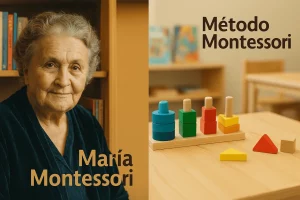
Montessori education offers a transformative approach that respects the individuality of each child, promoting independence, confidence, and emotional intelligence. By creating supportive environments both at home and in school, parents and educators can play a pivotal role in a child’s learning journey. If you are looking for local Montessori options, our site provides necessary tools, such as the Montessori locator tool and resources like our comprehensive guide for parents and educators. Embrace this enriching educational philosophy and watch your child flourish. Explore more about María Montessori’s vision and practices through our resources and articles designed for you.