Introduction to Montessori Education
In recent years, many families have begun searching for “Montessori near me” or “Montessori school near me” in hopes of finding educational environments that align with their values of independence, respect, and personalized learning for their children. The Montessori educational philosophy, founded by the Italian physician and educator María Montessori, encourages children to learn at their own pace in a thoughtfully prepared environment. For families eager to explore this approach, our website offers a comprehensive Montessori locator and various helpful guides to assist in your journey.
A Brief Biography of María Montessori
María Montessori was born on August 31, 1870, in Chiaravalle, Italy. She was one of the first women to graduate from medical school in Italy and quickly developed a passion for improving the educational experiences of children, especially those from disadvantaged backgrounds. Her observations in the early 1900s led her to create a new educational philosophy that emphasized self-directed learning and the importance of a child’s environment. The first Montessori school, Casa dei Bambini, was opened in Rome in 1907, and her methods have since spread across the globe, establishing pioneering educational institutions. Today, many parents and educators are keen to understand more about María Montessori y su legado in shaping modern education.
The Montessori Method in the Classroom
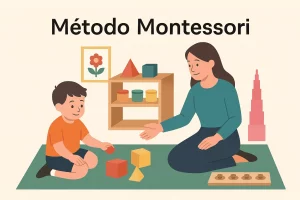
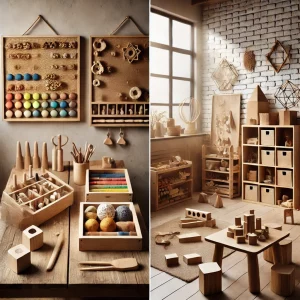
As educators begin to implement the principles of the Montessori Method, they often find innovative ways to arrange their classrooms to foster a child’s natural desire to learn. For instance, a teacher might reorganize their classroom by setting up distinct learning areas that focus on practical life skills, sensorial activities, and academic subjects, encouraging children to move freely and choose their activities. This empowers students by providing them with the autonomy to make decisions about their learning and to engage in meaningful interaction with their peers. You can learn more about the método Montessori and how it can be effectively applied in educational settings across various age groups.
Real-Life Application: Transforming the Classroom
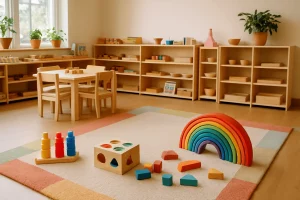
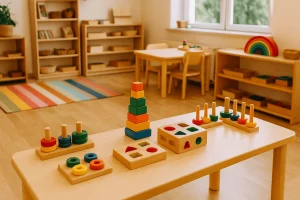
Consider the case of a first-grade teacher who decides to transform their traditional classroom into a Montessori-inspired environment. She begins by removing unnecessary clutter and introducing child-sized furniture, where students can easily access materials on low shelves. Instead of a lecturing format, the teacher encourages students to collaborate on projects, utilize hands-on materials, and engage in independent exploration. The classroom, once a place of passive learning, becomes a vibrant space where curiosity and creativity thrive.
Preparing Homes for Montessori Learning
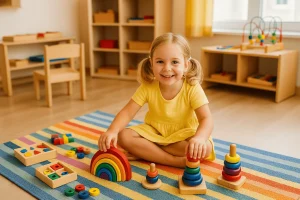
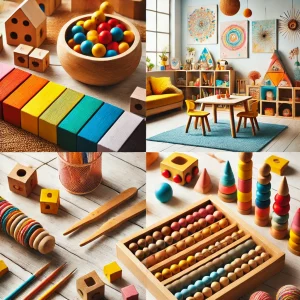
In addition to modifying educational environments, many parents are keen to prepare their homes to support their children’s independence through the Montessori philosophy. Parents might create a special area in their home where their child can explore, experiment, and engage in practical life skills. For instance, they could set up a low kitchen station where their child can help with meal prep, or a dedicated play space that encourages imaginative play with open-ended materials. Transitioning a home to incorporate pedagogía Montessori principles allows children the freedom to learn and grow through everyday experiences.
Real-Life Example: A Montessori-Inspired Home
Imagine a family interested in fostering their child’s independence. They take the time to rearrange their child’s bedroom, ensuring that toys are accessible on low shelves and that the child can easily select their clothing from a small wardrobe. The family introduces a “work cycle” where the child has the freedom to choose their activities throughout the day, from reading to sensory play, enhancing their self-directed learning. The inclusion of such elements in the home supports the principles of the Montessori approach and nurtures a child’s fundamental desire for autonomy.
The Impact of Montesorri Education
Research has shown that the Montessori Method can have a lasting impact on a child’s development, both academically and socially. Children who participate in Montessori programs often exhibit increased motivation, better problem-solving skills, and greater emotional regulation. Moreover, Montessori education cultivates a sense of community, where collaboration and peer learning are encouraged, contributing to stronger social skills and empathy among students.
Success Stories from Montessori Institutions
Across the globe, numerous success stories demonstrate the efficacy of the Montessori approach. For instance, an institution in a metropolitan city reported that students who had gone through a Montessori education scored above average on standardized tests while also demonstrating superior skills in social interactions and leadership qualities. This underscores the argument that Montessori methods not only prepare children for academic success but also equip them with essential life skills.
Resources and Learning More About Montessori
For those who wish to delve deeper into the Montessori philosophy, our website offers extensive resources that cover various aspects, including parenting, teaching, and understanding child development through a Montessori lens. Our AI assistant, MarÍA, is available on the Montessori Maria website to help guide families and educators as they explore this enriching educational approach.
Conclusion
Whether you are a parent looking for a Montessori school for your child or an educator aiming to implement Montessori principles in your classroom, understanding the philosophy and methods developed by María Montessori is essential. With a keen focus on fostering independence, self-directed learning, and respect for a child’s natural development, Montessori education provides a powerful alternative to conventional schooling. As you search for “Montessori near me,” consider exploring our useful resources, including articles such as Understanding Montessori: A Comprehensive Guide for Parents and Montessori Pedagogy: A Comprehensive Guide.