Understanding Montessori Education
Parents and educators across the globe frequently find themselves searching for “Montessori near me” or “Montessori school near me” to explore educational options rooted in the Montessori philosophy. Recognizing the importance of a nurturing and supportive learning environment, our website features a Montessori locator tool that helps families discover local Montessori resources. For example, you can explore options like Montessori School in Terni, Umbria, ensuring that children experience education that fosters autonomy and passion for learning.
The Home Environment
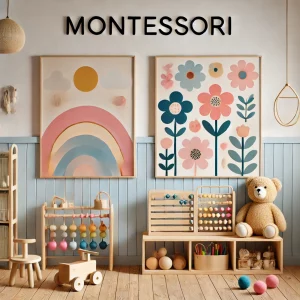
The Montessori method isn’t just confined to the classroom. A well-prepared home environment significantly contributes to a child’s development within this educational framework. By consciously creating Montessori-inspired spaces, parents can promote independence and responsibility. For example, consider how a family could adapt their kitchen to encourage their child’s involvement in meal preparation.
Creating a Montessori-Inspired Kitchen
In a Montessori kitchen, children should have access to child-sized tools and ingredients. A low shelf filled with measuring cups, wooden spoons, and jars of pasta allows children to partake in cooking. This not only teaches them basic culinary skills but also nurtures their confidence and self-regulation as they learn to handle tasks independently. Educators and parents can refer to our introduction to Montessori pedagogy for more insights on creating enriching environments at home.
Furniture and Organization
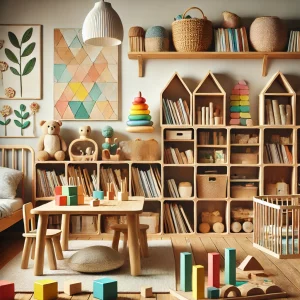
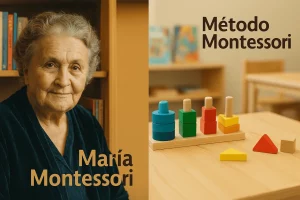
In addition to the kitchen, parents can apply Montessori principles throughout the home by using furniture and organization that cater to a child’s needs. For instance, consider low-hanging hooks for coats or accessible bins for toys. By adapting their home, parents are literally ‘lowering the barriers’ for their child’s independence, which aligns with Dr. Maria Montessori’s teachings. The focus here is on allowing children the freedom to move and act within their space, fostering their self-reliance.
The School Environment
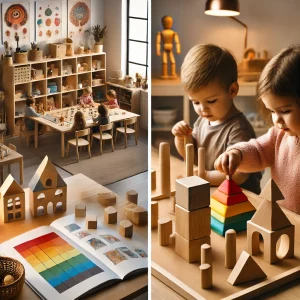
When it comes to Montessori schools, the environment reflects the core principles of Maria Montessori’s philosophy. This structured yet flexible space is designed to encourage exploration and discovery. Classrooms are thoughtfully arranged with various learning modules to allow students to choose activities that appeal to their interests. A notable practice in these classrooms is the concept of mixed-age groups where children learn from one another, fostering a sense of community.
Examples of Montessori Classrooms
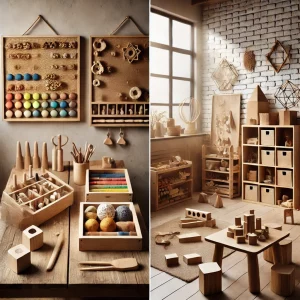
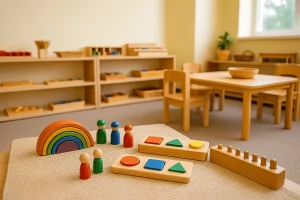
In a Montessori classroom, a teacher might adapt shelves to promote independence, ensuring that materials are within reach and organized. For instance, an area dedicated to practical life skills might contain simple activities like pouring, folding, or sweeping. Children gravitate towards these tasks naturally, learning not just the skills themselves but also developing self-regulation and concentration.
Another common practice is the ‘work period,’ during which students engage deeply with activities of their choice. This free choice encourages intrinsic motivation, making learning a joyful experience rather than a chore. To dive deeper into the pedagogical methods that make this possible, readers can refer to our comprehensive guide on Montessori pedagogy.
Emotional Development
Montessori education places a strong emphasis on emotional development alongside cognitive skills. Children in Montessori settings often exhibit strong self-regulation capabilities. This is particularly relevant as it directly contributes to their overall academic performance and social interactions.
Promoting Emotional Intelligence
In a supportive Montessori environment, educators guide children through various social scenarios, which helps them develop empathy and effective communication skills. For instance, when conflict arises between students, teachers intervene by asking guiding questions that allow children to articulate their feelings and resolve issues collaboratively. This method equips them with long-lasting tools for emotional maturity.
The Role of Independence
Independence plays a crucial role in emotional development. By implementing strategies that promote self-directed learning, such as allowing children to choose their projects, they become more confident in their abilities to make decisions. A student who learns to manage their time and choose their tasks is not only enhancing their academic skills but is also cultivating self-worth and resilience.
Conclusion: Empowering Future Generations
In summary, the Montessori approach provides a holistic framework for education that nurtures independence, emotional development, and a love for learning. Whether in a school setting or at home, implementing Montessori principles allows children to thrive. For families looking for specific resources, be sure to utilize tools such as the Montessori locator tool or explore local options like a Montessori school near you. For continuous learning, visit our website and discover a treasure trove of articles that delve deeper into these practices. You can check out our recent posts here, here, here, here, and here.