Exploring Montessori: Where to Begin
Many families embark on their educational journey by searching for “Montessori near me” or “Montessori school near me.” This signifies the growing interest in Montessori pedagogy as an effective method of education that fosters independence, curiosity, and a love for learning in children. For those seeking to locate Montessori schools globally, our website offers a comprehensive Montessori locator, where you can find local options, including specific examples like those in Oberursel, Germany.
Core Principles of Montessori Pedagogy
Montessori pedagogy is grounded in several core principles that guide its unique approach to education. These principles include the prepared environment, autonomy, observation, and sensory learning. Understanding and applying these principles can transform both traditional classrooms and aspiring teachers’ first experiences in a Montessori setting.
The Prepared Environment
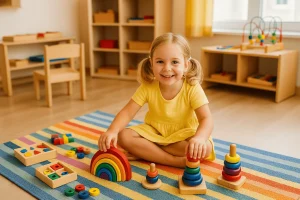
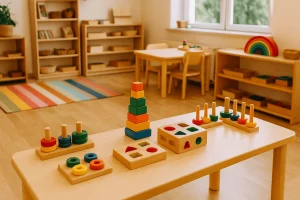
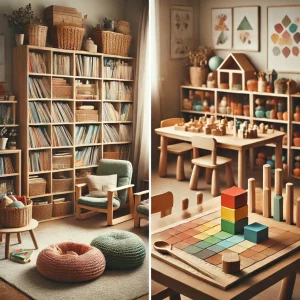
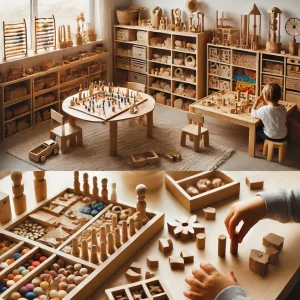
A prepared environment is essential in Montessori classrooms. It refers to a learning space that is thoughtfully arranged to encourage exploration, independence, and interaction. For example, if a traditional classroom is being adapted to a Montessori setting, educators can involve children in the process. They can ask students what materials they find most engaging and incorporate those into the classroom. By adjusting the layout, creating learning stations, and ensuring materials are accessible, the teacher sets the stage for self-directed learning.
Autonomy
Autonomy is a foundational principle in Montessori education; children are encouraged to make choices in their learning. For a student teacher planning their first Montessori environment, fostering autonomy begins with providing a range of activities for children to choose from. For instance, they might set up art stations, a reading corner, or even a science experiment table. Each area should have materials that are appropriate for the children’s age and developmental level, allowing them to engage at their own pace.
Observation
Observation is a key technique that Montessori educators use to understand each child’s interests, strengths, and needs. Instead of directing activities, the educator observes and then provides support or materials as needed. For example, during a period of free activity, the teacher may notice a child who is captivated by building with blocks. Instead of interrupting, they could introduce a new architectural challenge that aligns with the child’s interest.
Sensory Learning
Montessori education emphasizes sensory learning, recognizing that hands-on experiences deepen understanding. A practical example can be seen in adapting traditional math lessons. Instead of only using worksheets, a teacher can provide Montessori materials like number rods or bead frames that allow children to manipulate and explore mathematical concepts physically. This engages multiple senses and facilitates a deeper grasp of abstract ideas.
Applying Montessori Principles in Your Classroom
To further explore the Montessori approach, you can refer to our comprehensive guide on Montessori pedagogy. This resource delves into the intricacies of the principles discussed and how they relate to everyday practices for educators and parents alike.
Creating Your Montessori Space
Whether you are a parent setting up a home learning area or an educator creating a classroom, it’s essential to curate a space that reflects Montessori principles. The Understanding Montessori guide offers insights into effectively organizing and implementing Montessori principles in various settings.
The Role of Teacher-Training Students
For aspiring educators, understanding Montessori pedagogy is crucial not only for their future classrooms but also for their philosophy towards education. Studying introducción a la pedagogía Montessori helps them frame their teaching style, providing a roadmap to cultivate an engaging, student-centered learning environment.
Mentorship and Support
Student teachers benefit significantly from mentorship in Montessori environments, learning the subtleties of observation and the importance of creating a rich learning atmosphere. Organizations and resources found at the Montessori Maria website offer valuable support, including advice for new educators and innovative classroom management strategies.
Why Montessori? The Benefits
Families and educators considering Montessori should understand the numerous benefits associated with this educational approach. Research consistently shows that Montessori students develop strong academic skills, social responsibility, and intrinsic motivation. Children are not just passive recipients of knowledge; they are active participants in their own learning journey. The comprehensive guide for parents and educators on Montessori education illustrates these benefits and how they can positively impact a child’s development.
The Long-Term Impact of Montessori Education
As children progress through Montessori environments, they tend to acquire not only academic knowledge but also life skills such as critical thinking, problem-solving, and effective communication. The exposure to autonomy and real-world experiences prepares them for future challenges, ensuring they become well-rounded individuals. This transformative approach is detailed further in our article about the understanding the Montessori method.
Conclusion: Your Montessori Journey Awaits
Whether you are a parent searching for “Montessori near me” or an educator seeking to implement Montessori principles in your practice, knowledge about this pedagogical approach is key. The insights shared in this article can serve as a foundation for developing a deeper understanding of Montessori pedagogy. As you embark on this journey, remember to explore our website for further resources and guidance, including information on María Montessori and her impact on education.
Embrace the Montessori philosophy, and you’ll unlock a world of possibilities for inspiring a love of learning in the children you care for.