Introduction
Many families embarking on their educational journey often begin by searching for terms like “Montessori near me” or “Montessori school near me.” This interest typically leads to a broader exploration of Montessori pedagogy and its fundamental principles. For those wishing to find local options, our website provides a global Montessori locator that can help you connect with schools in your area. You can check it out at Montessori near me. For specific examples, feel free to explore our page for Oberursel, Germany.
The Core Principles of Montessori Pedagogy
Montessori pedagogy is underpinned by several key principles that distinguish it from traditional educational methods. These principles include the prepared environment, autonomy, observation, and sensory learning among others. Understanding these can greatly assist parents, educators, and those in teacher training in creating effective and nurturing learning spaces.
Prepared Environment
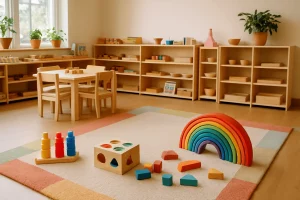
The concept of the prepared environment is foundational in Montessori pedagogy. It emphasizes the importance of designing a learning space that caters to children’s needs, fostering independence and exploration. For instance, in a traditional classroom being adapted to Montessori principles, furniture might be arranged to facilitate movement and access to materials. Shelves can be lowered for easy reach, and materials can be meticulously organized according to learning areas. This practical application allows children to choose their activities, promoting autonomy and engagement.
Autonomy
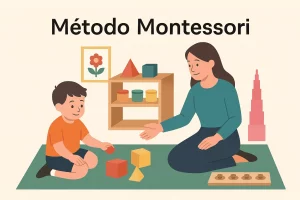
Autonomy is another cornerstone of Montessori education. Children are encouraged to make choices and lead their own learning experiences. For example, a student teacher planning their first Montessori environment might start by offering a selection of activities – such as art, practical life skills, and sensory exploration – allowing children to decide what they wish to engage with first. In this way, the teacher becomes a guide rather than a director, fostering a sense of self-direction in learners.
Observation
Observation plays a crucial role in the Montessori classroom. Educators take time to observe children’s interactions with materials and each other, gaining insights into their interests and developmental levels. For example, if a teacher observes a child working intently with a puzzle, they might introduce more challenging puzzles to elevate that child’s learning experience. This responsive approach ensures that each student’s individual needs are met.
Sensory Learning
Another key principle is sensory learning, which emphasizes learning through the senses. In a Montessori environment, materials are designed to be tactile and engaging. For example, a traditional classroom could implement sensory bins filled with various textures such as rice, beans, or sand. These materials help develop fine motor skills while also engaging children’s sense of touch. By incorporating these elements, a traditional classroom can transform into a sensory-rich environment.
Applying Montessori Principles in Practice
To further solidify your understanding of Montessori pedagogy, it’s beneficial to explore how these principles can be effectively applied in practice. Through a multitude of resources, you can familiarize yourself more with the philosophy. Our guía completa sobre la pedagogía Montessori serves as an excellent starting point.
Transforming a Traditional Classroom
Transforming a traditional classroom into a Montessori-inspired space requires thoughtful planning. Educators must consider how to create an environment that encourages independence and exploration. This can include removing unnecessary distractions, integrating natural light, and utilizing resources that promote hands-on learning. An educator could also designate specific areas for various types of learning—quiet reading corners, science exploration stations, and art areas—which cater to different interests and learning styles.
The Role of Educators
The role of educators in a Montessori setting shifts from traditional teaching methods to a more facilitative approach. A student teacher learning to implement Montessori strategies will need to develop strong observational skills. They will watch as children engage with materials, participating in their learning at their own pace. This is immensely beneficial as it allows the teacher to connect learning with children’s interests and developmental needs.
Fostering a Community of Lifelong Learners
Montessori pedagogy not only benefits children but also creates a community of lifelong learners. Families who embrace these principles often find themselves modeling the same autonomy and respect for learning at home. Parents interested in expanding their knowledge can find a wealth of articles to support their journey, such as The Transformative Power of Montessori Education.
Creating Partnerships with Families
Building relationships with families is essential in a Montessori environment. The teacher can actively involve parents by providing them with resources on the principles behind Montessori education. In doing so, they foster a collaborative environment where the family understands the importance of their role in the child’s education, contributing to a holistic approach that resonates both at school and home.
Further Resources and Support
For those who are new to Montessori education or for educators wanting to deepen their understanding, we invite you to explore the Understanding the Montessori Method. It provides a comprehensive guide tailored for both parents and educators.
Empowerment through Knowledge
By familiarizing yourself with the principles of Montessori pedagogy, you empower both yourself and your children. Knowledge of these principles encourages respect for a child’s natural learning process and promotes an environment where they can thrive and develop at their own pace. Understanding the vision of María Montessori can also provide deeper insights into why these principles remain relevant and transformative.
Conclusion
Montessori pedagogy represents a shift from traditional educational perspectives, instead prioritizing the individual learning styles and developmental needs of children. The principles of prepared environment, autonomy, observation, and sensory learning are just the beginning. As parents, educators, and teacher-training students, embracing these principles can fundamentally alter educational experiences. To continue exploring the diverse aspects of Montessori education, please visit our website for additional resources and articles like Understanding Montessori Pedagogy.