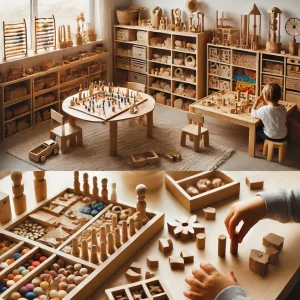
Introduction to Montessori Education
As parents and educators explore different educational philosophies, many often find themselves searching for “Montessori near me” or “Montessori school near me” in the hopes of discovering valuable resources for their children’s education. Montessori education, founded by María Montessori, emphasizes child-led learning and hands-on experiences. Our website offers a handy Montessori locator tool to assist families in finding nearby Montessori schools, such as the examples found at Montessori near me and Montessori school near me.
The Home Environment
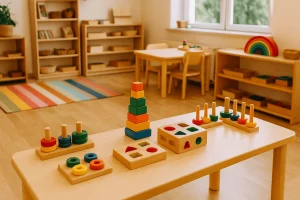
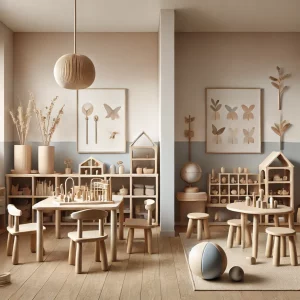
Creating a Montessori-inspired home environment can significantly enhance a child’s learning experience. Parents can set up learning spaces that encourage independence, exploration, and concentration. Simple changes, such as having accessible shelves, can make a world of difference.
Independence Through Environment
For instance, consider a family who transforms a corner of their living room into a mini-education station. Lowering shelves, so children can access their books and learning materials independently, allows them to choose their activities. A mother might arrange math materials on one shelf and art supplies on another. This setup empowers children to make choices that fit their interests and learning styles, fostering a sense of independence that is foundational in Montessori philosophy.
Creating a Montessori-Inspired Kitchen
Another practical example is a family creating a Montessori-inspired kitchen space. By including child-sized utensils and containers, parents encourage their children to participate in meal preparation. They can learn valuable life skills while also understanding the basics of nutrition and cooking. This approach aligns with the Montessori emphasis on realistic, hands-on activities, which can greatly enrich the home education experience.
The School Environment
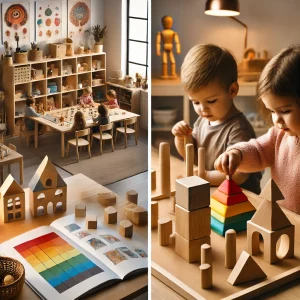
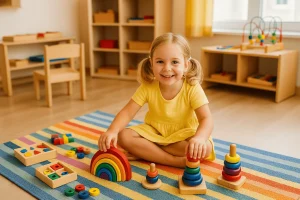
In the school environment, Montessori educators focus on fostering self-directed learning. Classrooms are designed to be engaging, inviting children to explore at their own pace, understanding that each child learns differently.
Adaptation for Independence
A great example of this can be seen in a classroom where a teacher adapts the learning materials according to the children’s developmental needs. By carefully observing students, a teacher may notice that some children struggle with particular tasks. They might customize the learning materials to better suit these individual needs. For instance, using tangible objects in math lessons can help visual learners grasp abstract concepts more effectively.
Benefits of Self-Regulation
Many students thrive in this environment as they learn self-regulation. A Montessori classroom often includes a quiet corner where students can go to reflect, regroup, or simply take a break when feeling overwhelmed. This space is vital for emotional development, allowing students to manage their feelings and develop coping strategies, which can lead to better academic and social outcomes.
Emotional Development
Emotional development is a crucial aspect of Montessori education, where children learn to understand their emotions and those of others. The Montessori approach fosters emotional intelligence by providing children with opportunities to express themselves and engage in meaningful social interactions.
Promoting Empathy
One practical example is through collaborative projects. In a Montessori classroom, children often work together on tasks that require teamwork and empathy. For instance, a project about environmental conservation can bring students together, allowing them to discuss their views and collaborate on solutions. This not only enhances their understanding of the topic but also instills a sense of community and responsibility in each student.
Mindfulness Practices
In some Montessori settings, educators introduce mindfulness practices to help children become more aware of their emotions. Simple activities like deep breathing or guided meditation can be integrated into the daily routine, giving students the tools they need to self-soothe and manage their feelings. By promoting emotional awareness, parents and educators can work towards developing well-rounded children who thrive both academically and emotionally.
Conclusion
The Montessori method focuses on nurturing each child’s potential in a holistic manner. By combining an engaging home environment with a supportive school setting, we can encourage independence, emotional intelligence, and a love for learning. For more in-depth information about the Montessori philosophy, check out our guía completa sobre la pedagogía Montessori and our introducción a la pedagogía Montessori. To find the right educational path for your child, explore the Montessori Maria platform and its AI assistant MarÍA, ideal for discovering resources and schools tailored to your needs.
If you’re interested in learning more about recent insights into the Montessori approach, you can find the latest articles at Understanding the Montessori Method for Parents and Educators, Understanding María Montessori: A Guide for Parents and Educators, Understanding Montessori: A Guide for Parents, Montessori near me in Yoder Town, WY, and Montessori near me in Wright Town, WY.