Introduction to Montessori Education
As parents and educators around the world seek out effective educational frameworks for children, terms like “educacion montessori” have gained tremendous traction. With many searching phrases like “Montessori near me” or “Montessori school near me“, it is clear that more families want to implement this transformative approach in their homes and schools.
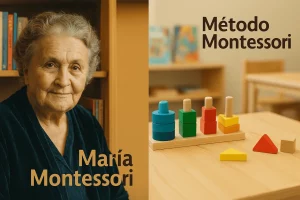
Montessori education, founded by María Montessori, emphasizes independence, respect for a child’s natural psychological development, and a learning environment where children can thrive. Our website features tools like the Montessori locator tool to help you find resources near you, including schools, materials, and community support.
The Home Environment
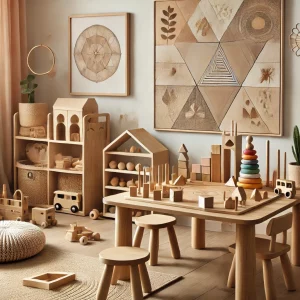
Creating a Montessori-inspired home environment can foster your child’s independence and natural curiosity. Here are a few strategies to implement in your own home.
1. Adapted Learning Spaces
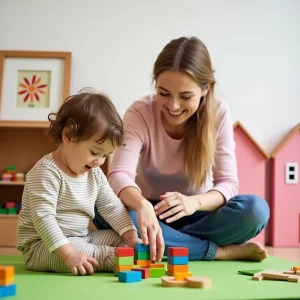
One of the cornerstones of Montessori education is that children learn best in environments adapted to their needs. A common example is a Montessori-inspired kitchen space. Imagine a child’s kitchen corner equipped with child-sized utensils and a small table set just for them. This setup allows little ones to join in meal prep, enhancing their skills of preparation and responsibility.
2. Freedom of Movement
While a designated area for play is essential, it’s equally important to allow for freedom of movement within the home. This can be achieved through open spaces where children can explore, whether it’s a reading nook filled with books tailored to their interests or a small garden where they can learn to plant and care for flowers.
3. Independence in Self-Care
Another effective strategy includes instilling self-care routines. Provide a low-hanging rack for clothing or a basin for washing hands, enabling children to practice these skills independently without needing an adult’s assistance constantly. This encourages both confidence and responsibility from a young age.
The School Environment
The Montessori educational setting significantly differs from traditional classrooms, focusing on unstructured learning while still providing essential structure. Here’s how educators can create a conducive learning atmosphere.
1. Multi-Age Classrooms
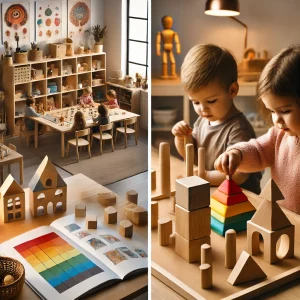
Montessori classrooms often include multi-age groupings. For example, a 5-year-old might learn alongside 7- and 9-year-olds. This collaborative setting fosters peer learning, allowing younger children to benefit from older students while also providing older children the opportunity to reinforce their learning by teaching others.
2. Prepared Environment
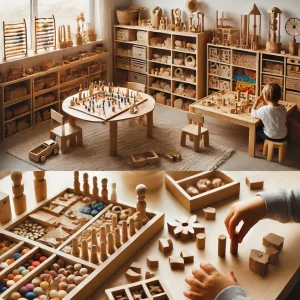
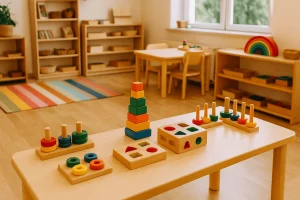
The physical environment must be carefully designed and maintained to meet the developmental needs of the students. Consider a teacher who adapts the shelves to be within children’s reach, organizing materials by subject. Each shelf can contain activities targeting specific skills, like practical life skills or sensory exploration, ensuring students can access learning tools independently.
3. Observation and Adaptation
Educators closely observe their students to identify their interests and learning styles. For instance, a child enamored with nature would benefit from tailored activities centered around exploring the outdoors, emphasizing how natural elements interconnect with academic subjects like biology or geography.
Emotional Development
The emotional development of a child is vital in Montessori education, fostering self-regulation, confidence, and social skills. Here’s how both parents and educators can support this aspect.
1. Encouraging Self-Regulation
One of the hallmarks of Montessori education is the emphasis on self-regulation. By giving children choices in their learning, such as selecting their work or choosing a peer partner, they learn to manage their emotions and responses. In practice, if a student is upset during group work, a teacher might guide them to a quiet corner where they can reflect and manage their emotions before rejoining the class.
2. Building Social Skills
In shared community spaces, children learn vital social skills through interactions. Encourage discussions around conflict resolution, teaching children how to articulate their feelings and resolve disputes amicably. For example, if two children wish to use the same toy, guiding them through a discussion can foster understanding and cooperation.
3. Promoting Empathy
Lastly, fostering an environment of empathy is essential. Parents can support this at home by discussing emotions and experiences or utilizing storytime to analyze characters’ feelings and motivations. This helps children relate better to others and understand perspectives outside their own.
Conclusion
In conclusion, whether at home or in school, implementing the principles of Montessori education can create a supportive atmosphere tailored to children’s natural development. The resources available, including our comprehensive guía completa sobre la pedagogía Montessori and the introducción a la pedagogía Montessori, offer great insights into this transformative approach.
As you embark on your journey, utilize tools such as the Montessori Maria platform and its AI assistant MarÍA to guide you in finding resources and environments necessary for your child’s Montessori experience. Together, we can cultivate a rich and nurturing environment conducive to holistic learning and development.
content