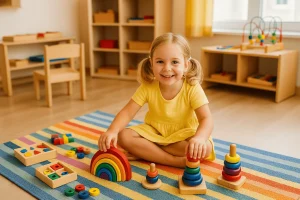
Introduction
In today’s digital age, it’s common for families to search for “Montessori near me” or “Montessori school near me” when seeking educational guidance for their children. Education is more than just academics; it’s about nurturing a child’s overall development and independence. Our website offers a Montessori locator and helpful guides that can assist you in finding the right resources to support your child’s learning journey. You can find these useful tools at Montessori near me and also explore more about local institutions such as the Montessori school in Terni, Umbria.
A Brief Biography of María Montessori
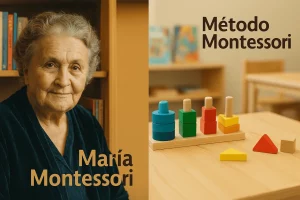
María Montessori was born in 1870 in Italy and was one of the first women to graduate from medical school in her country. Her educational philosophy emerged from her understanding of child development and her scientific approach to education. Montessori noticed that children learned best in environments that catered to their natural curiosity and interests. Her method emphasizes independence, hands-on learning, and respect for a child’s natural psychological development. For a deeper understanding of her contributions, check out María Montessori y su legado.
The Montessori Method Explained
The método Montessori is rooted in fostering a child’s innate desire to learn. Unlike traditional educational models that often prioritize rote memorization, Montessori education focuses on experiential learning where children can explore materials at their own pace. This approach encourages self-directed learning, allowing children to follow their interests, thereby promoting a more engaging and effective educational experience.
Practical Examples in the Classroom
Picture a teacher reorganizing their classroom to embrace Montessori principles. Instead of a traditional layout with rows of desks, the teacher creates distinct learning areas—an art corner, a reading nook, a science exploration station, and a practical life section stocked with real tools and materials. This flexibility allows children to choose their activities based on interest, fostering independence and curiosity. The teacher becomes a facilitator, guiding children rather than dictating their learning.
Creating an Independent Space at Home
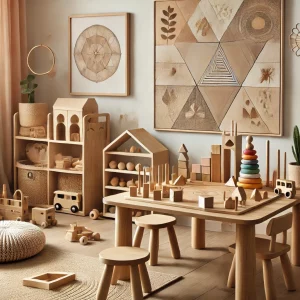
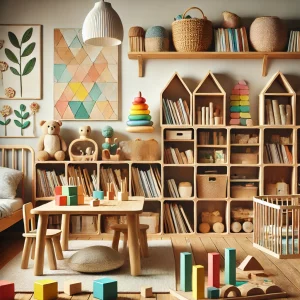
Similarly, parents can apply Montessori principles at home. Imagine a parent setting up their child’s room for independence. They might lower shelves so that their preschooler can access books and toys freely, incorporate a small table and chair for activities, or even implement bins labeled with pictures and words for organizing toys. These small changes empower children to take responsibility for their environment and to learn through play. For parents interested in diving deeper, check out our guide on Understanding Montessori Pedagogy.
Key Components of Montessori Education
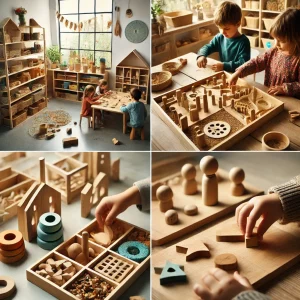
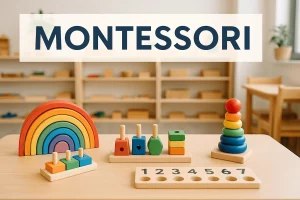
Montessori education features several core components: mixed-age classrooms, specialized learning materials, teacher observations, and a prepared environment. Mixed-age classrooms facilitate peer learning, where older students mentor younger ones, creating a community of learners. Specialized materials, designed to be tactile and interactive, help children grasp complex concepts through hands-on experience. Teachers in Montessori settings observe rather than instruct, allowing them to tailor their guidance to the individual needs of each student.
Benefits of the Montessori Method
Research indicates that children educated in Montessori settings often show higher levels of academic achievement, better social skills, and enhanced emotional intelligence. The focus on independence and self-motivation cultivates lifelong learners who are adept at problem-solving and critical thinking. If you would like to find more detailed insights on the transformation that Montessori pedagogy brings to education, visit pedagogía Montessori.
María Montessori’s Legacy Today
Today, the legacy of María Montessori endures through schools and educators worldwide, adapting her principles to meet modern educational needs. Many parents and educators strive to implement her teachings, ensuring that the focus remains on nurturing a child’s holistic development. The growing demand for Montessori education has led to an increase in Montessori schools, making it easier for families to locate suitable options. Parents often ask themselves: “What makes a good Montessori school?” A well-prepared environment, qualified teachers, and a commitment to child-centered learning are essential elements to look for.
Finding a Montessori School
If you’re beginning your search for a Montessori school, remember that you are not alone. The Montessori method is gaining recognition, leading many families to look for “Montessori near me.” Our online Montessori locator can help streamline your search, connecting you with schools that align with your values and educational goals. For more resources, check out our detailed articles on Montessori education, including Exploring Montessori Education, to gain a broad understanding of what suitable options may exist in your area.
María, Your AI Assistant
Navigating the world of Montessori education can be overwhelming, but you are not alone. Our AI assistant, MarÍA, is here to help guide you through the process. Visit the Montessori Maria website to engage with MarÍA for personalized insights tailored to your specific questions and needs.
Conclusion
María Montessori’s insights into child development continue to shape educational practices today. Whether you’re a parent preparing to set up your child’s space at home, or an educator revamping your classroom, embracing Montessori principles can lead to remarkable results. As you consider educational options, remember that resources like our Montessori locator and the array of articles on our website are at your disposal to support you in making informed decisions.
Finally, explore our recent articles, such as a guide on transitioning to Montessori education and Understanding Maria Montessori, for further information and support as you embark on this enriching journey.