The Global Demand for Montessori Education
In today’s fast-paced world, educational methods that prioritize independence, respect, and holistic development are more important than ever. This is reflected in common online searches like “Montessori near me” and “Montessori school near me.” These inquiries highlight a growing global demand for accessible Montessori resources that cater to diverse communities and uphold the educational values integral to the Montessori Method. For those searching for Montessori resources, our website offers a comprehensive Montessori locator, featuring international examples such as a Montessori school in Oberursel, Germany, ensuring that families can find the right educational environment for their children.
Core Principles of the Montessori Method
The Montessori method, founded by Dr. María Montessori, is a child-centered educational approach based on scientific observations of children. It emphasizes several key principles including autonomy, hands-on learning, mixed-age classrooms, and a prepared environment.
Autonomy in Learning
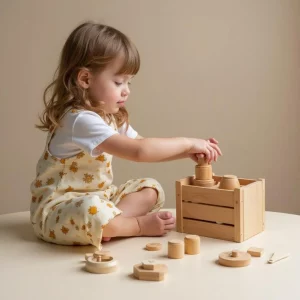
One of the fundamental tenets of the Montessori method is fostering autonomy in children. This principle encourages children to take charge of their own learning and make choices based on their interests and abilities. For instance, consider a typical morning routine at home. Instead of a parent directing every move, a child is encouraged to select their outfit, gather their breakfast, and pack their own school bag. This independence not only cultivates confidence but also instills a sense of responsibility and self-sufficiency.
Mixed-Age Classrooms
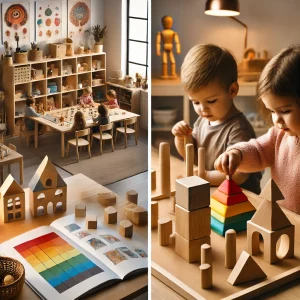
In a Montessori classroom, you often find children of varying ages learning together—a concept that capitalizes on peer learning and cooperation. For example, imagine a classroom setting where a five-year-old works on a simple math activity while an eight-year-old helps them understand the concept by showing them how to use Montessori materials. This dynamic fosters a sense of community, where older children learn leadership skills by mentoring their younger peers, and younger children are inspired by their older classmates.
Preparation of the Learning Environment
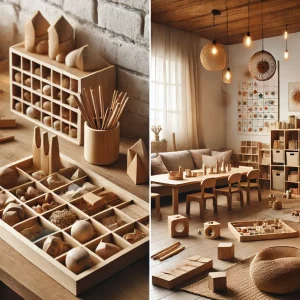
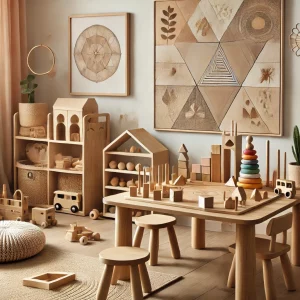
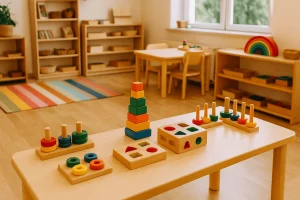
The prepared environment is another pivotal aspect of the Montessori method. This idea encompasses creating spaces that are inviting, organized, and accessible to children. In this manner, the environment itself becomes a learning tool. For more on this crucial aspect of Montessori education, you can read about pedagogía Montessori.
Experiential Learning
Learning in Montessori settings is highly experiential. Children engage with materials that are not only educational but also tangible, drawing their interest. For example, when young children utilize sandpaper letters to learn spelling, they engage multiple senses, enhancing their retention and understanding of language.
Real-life Applications of Montessori Principles
The Montessori method is effective not only in schools but can also be applied at home. By understanding and implementing its core principles, parents and educators can foster a nurturing environment conducive to a child’s growth and development.
Creating Montessori Spaces at Home
To create a Montessori-inspired space in the home, parents can designate specific areas for different activities. A reading nook can be created with easily accessible books, while craft supplies can be organized in a way that children can select and use them independently. The goal is to empower children to engage with their environment meaningfully and autonomously.
Daily Routines and Learning
Integrating the Montessori method into daily routines emphasizes the child’s role in family life. For example, during meal preparation, allowing children to wash vegetables, set the table, or even assist in cooking fosters practical life skills and strengthens their sense of contribution to the family.
The Impact of Montessori Education
Research has shown that children who experience Montessori education often develop better social and emotional skills than their peers in traditional education settings. This is attributed to the blend of autonomy, mixed-age learning, and community involvement that shapes their educational experience.
The Role of Educators and Parents
As advocates of the Montessori method, educators and parents must work collaboratively. By understanding the principles of the method, parents can better support their children’s learning at home while educators can communicate effectively with families about their students’ needs in the classroom.
Resources for Further Learning
For those interested in deepening their understanding of the Montessori method, our website provides a wealth of resources. You can explore a comprehensive guide to Montessori education for parents and educators or check out further insights into the method.
Connecting with Montessori Communities
By engaging with other parents and educators who are passionate about the Montessori approach, individuals can build supportive networks and share resources. Such connections are invaluable for those seeking to implement the Montessori method in their own lives. Our Montessori Maria website and its AI assistant MarÍA provide a platform for ongoing support and learning.
Final Thoughts
Embarking on the journey of understanding and implementing the Montessori method can be rewarding for both parents and educators alike. By embracing its principles, you help create an environment where children can thrive, develop independence, and cultivate a love for learning that lasts a lifetime. Remember, whether you’re searching for a Montessori school near you or seeking to integrate its practices into daily life, the resources, support, and community are available to guide you on this incredible educational journey.
Explore More
For more information and resources, check out our latest articles on the Montessori method and education, including insights into its specific applications, challenges, and benefits, at our Montessori website.