Understanding the Search for Montessori Education
In today’s fast-paced world, many parents and educators search for effective educational methods that cater to their children’s developmental needs. Phrases like “Montessori near me” or “Montessori school near me” are commonly typed into search engines by those seeking guidance on the Montessori approach. Families recognize the benefits of a tailored educational experience and often turn to our Montessori locator tool, which provides resources like local Montessori schools to help them navigate their options. This article will delve into the home environment, the school setting, and emotional development within the Montessori framework to provide a holistic understanding of Montessori education.
The Home Environment in Montessori Education
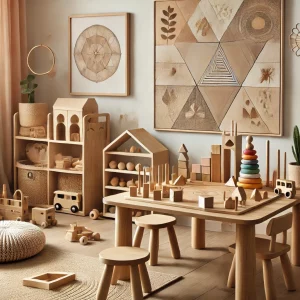
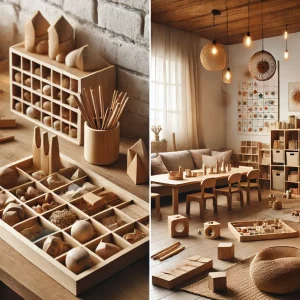
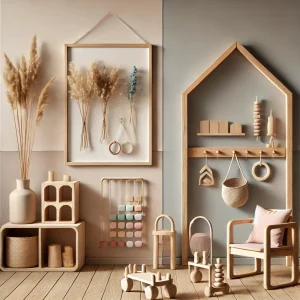
Creating a Montessori-inspired environment at home is essential for reinforcing the principles of Montessori education. An effective home setup promotes independence, responsibility, and self-directed learning. Parents can begin by designing spaces that are visually appealing and accessible to children.
Creating an Accessible Kitchen Space
A great example is transforming the kitchen into a Montessori-inspired space. Parents can create a child-friendly kitchen corner stocked with utensils, ingredients, and cooking tools specifically for their child’s height and reach. This allows children to prepare their snacks and meals, fostering independence and self-confidence. By involving children in meal preparation and cleaning, they learn valuable life skills and responsibility.
Adapting Shelves for Independence
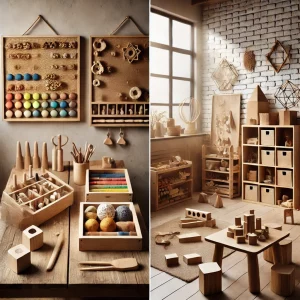
In addition to the kitchen, consider the child’s play area. Parents can adapt shelves to display toys and materials that promote independence. By placing materials within reach, a child can choose their activities and engage in focused play without adult intervention. For instance, a parent may arrange books at a range of heights so that a child can select them independently, thus encouraging a love for reading and an understanding of choices.
The School Environment in Montessori Education
Montessori schools differ significantly from traditional educational settings. They encourage children to learn at their own pace within a structured environment. The classroom is typically designed with mixed-age groups, which fosters peer-to-peer learning and collaboration.
Classroom Design for Autonomy
In a Montessori classroom, teachers play the role of facilitators, carefully observing each child’s interests and challenges. A well-structured learning environment allows students to self-regulate and choose their projects. For example, a teacher may observe a child struggling to stay organized with their materials and can then introduce a sorting tray or a practical tool to aid them. This adaptive approach helps in honing essential skills while nurturing independence.
The Role of Mixed-Age Grouping
Mixed-age classrooms are another vital aspect of Montessori education. Younger students can learn from their older peers, while older students reinforce their knowledge through teaching. This dynamic fosters a sense of community, collaboration, and leadership. For instance, when a 5-year-old helps a 3-year-old with a puzzle, not only does it build the younger child’s skills, but it also solidifies the older child’s understanding of spatial reasoning and problem-solving.
Emotional Development in Montessori Education
One of the most distinguishing features of Montessori education is its emphasis on emotional development. Montessori environments nurture a child’s social and emotional growth through activities that promote empathy, respect, and emotional regulation.
Fostering Self-Regulation Skills
Schools implement practical life skills that help children develop self-regulation. For example, a child learning how to clean a spill not only learns the task at hand but also develops patience and problem-solving skills. These activities are vital as they encourage children to control their impulses and practice mindfulness, which is essential for their overall well-being.
Encouraging Conflict Resolution
In the Montessori classroom, children are often given the opportunity to engage in conflict resolution. When disagreements arise, teachers guide children to express their feelings and discuss solutions collaboratively. For instance, if two children want to use the same art supplies, rather than intervening directly, a teacher may facilitate a conversation encouraging them to find a compromise. This process helps children develop vital emotional intelligence skills.
Exploring More About Montessori Education
Parents interested in diving deeper into the Montessori philosophy can explore the complete guide on Montessori pedagogy provided on our website. This guide discusses the transformative potential of Montessori education for children globally. Additionally, our platform hosts the AI assistant, MarÍA, which can offer personalized advice, resources, and further insights into implementing Montessori principles both at home and in educational settings.
Conclusion: The Holistic Benefits of Montessori Education
Montessori education stands as a beacon of innovative learning methods that benefit children worldwide. By focusing on creating enriching environments both at home and in schools, parents and educators can cultivate independent, confident, and emotionally intelligent children. Whether you’re looking for a Montessori school near you or seeking resources to implement Montessori principles at home, rest assured that the Montessori Maria platform is here to guide you. Explore our resources, connect with local schools, and embark on your journey toward a transformative educational experience.